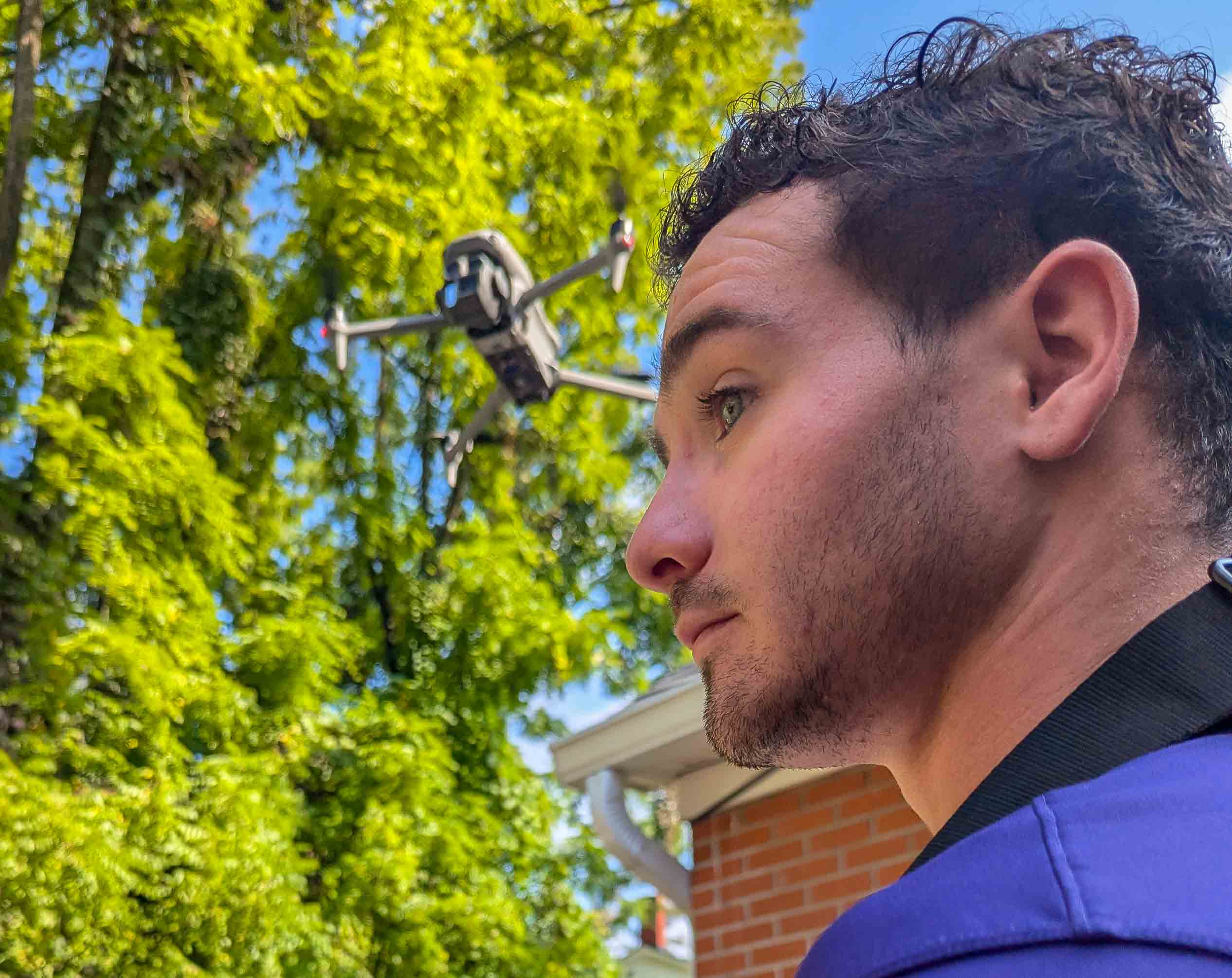
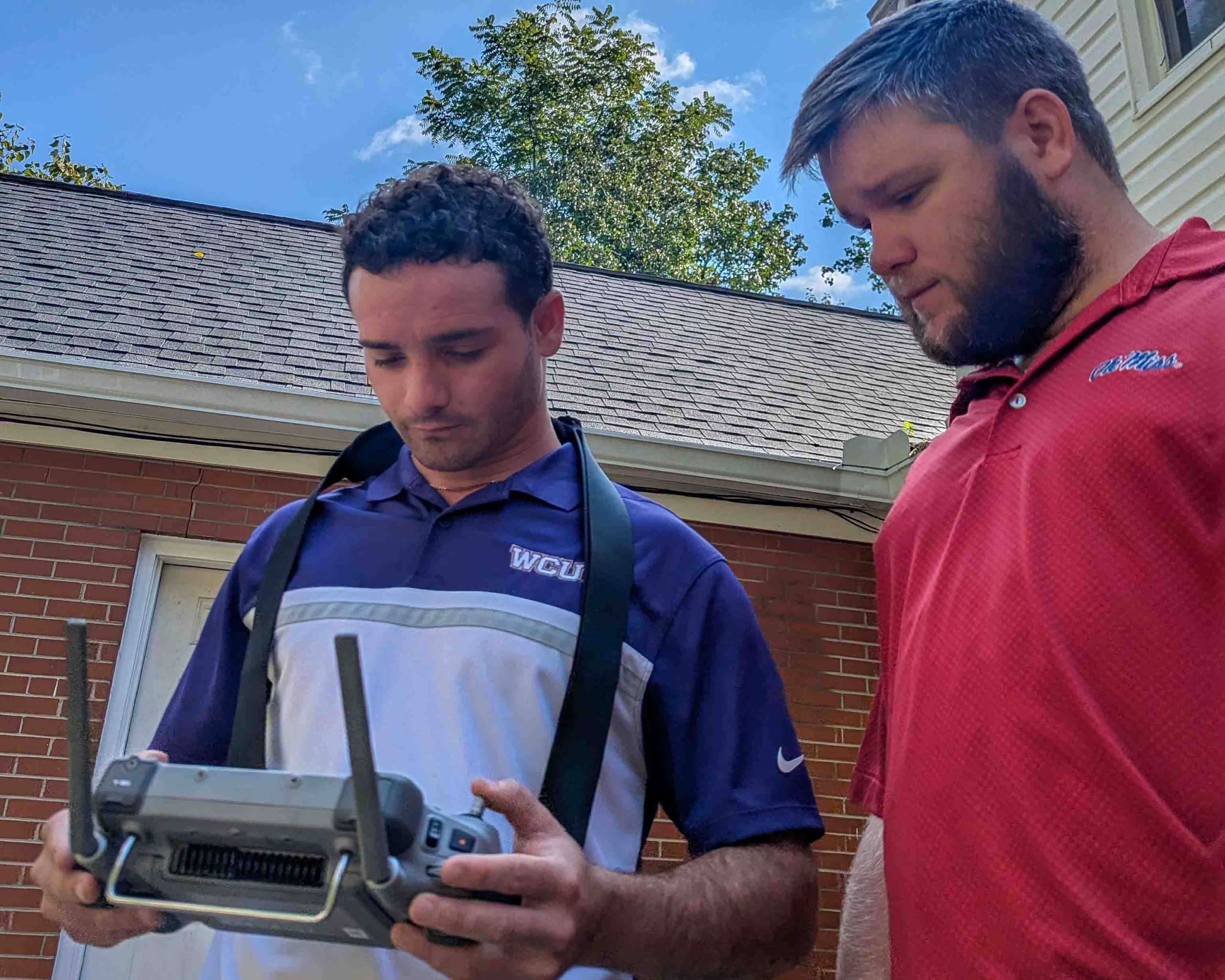
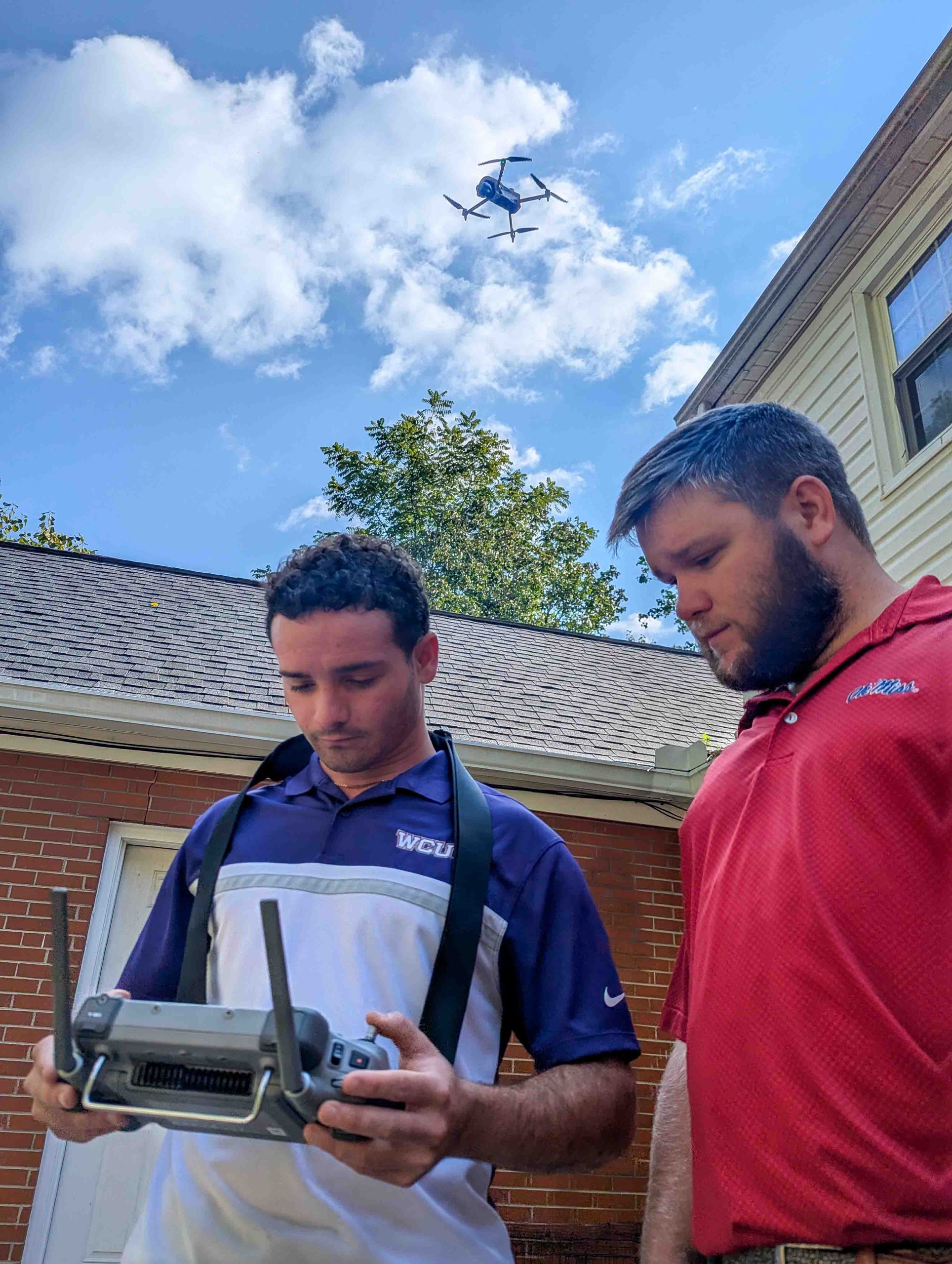
Western Carolina University construction management students carefully piloted a drone this fall to record every angle of the REACH of Haywood County shelter and surrounding property. Their mission: create a detailed 3D interactive model to help REACH leaders and supporters visualize and plan a renovation and expansion of its shelter for survivors of domestic violence, sexual assault, elder abuse, and human trafficking.
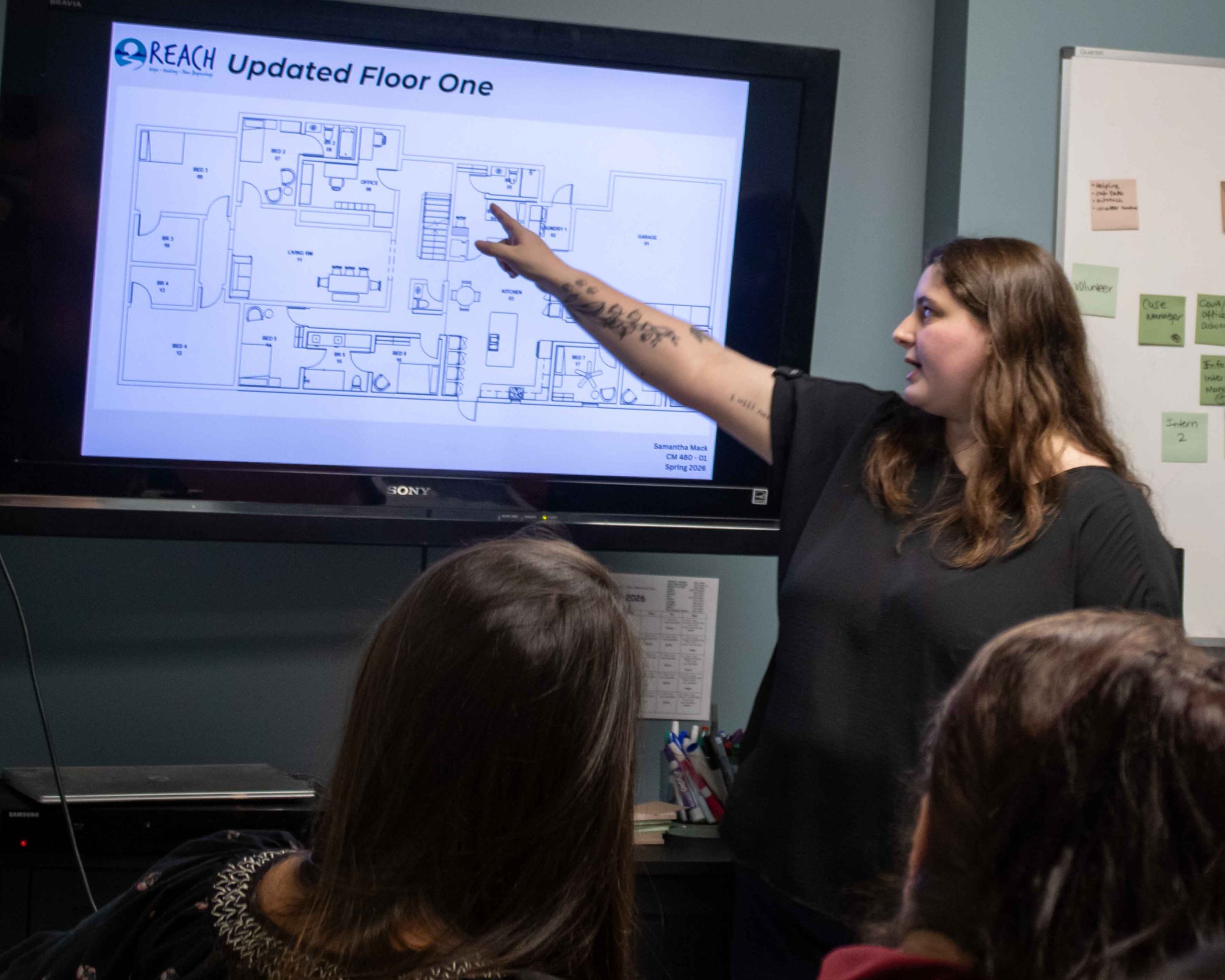
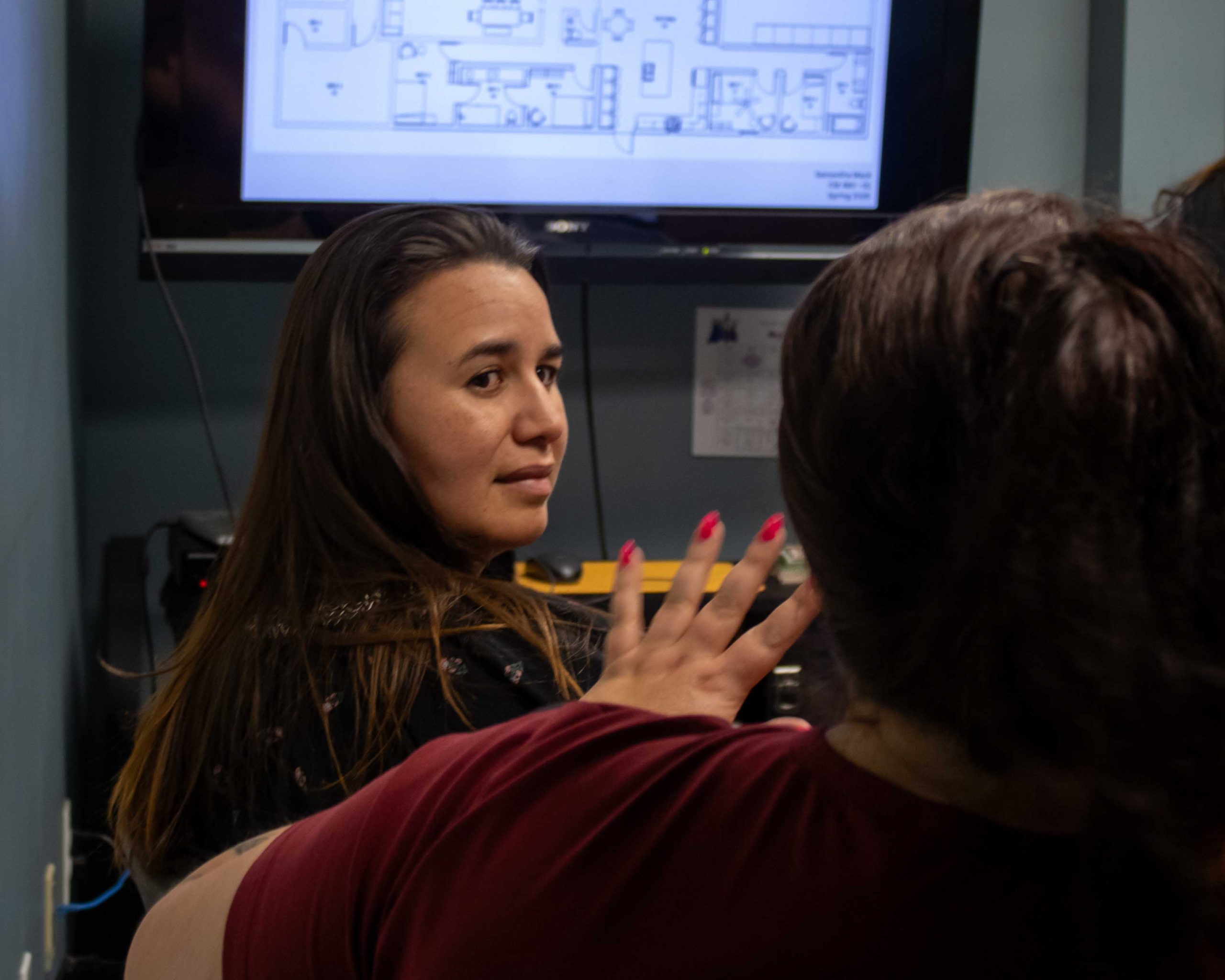
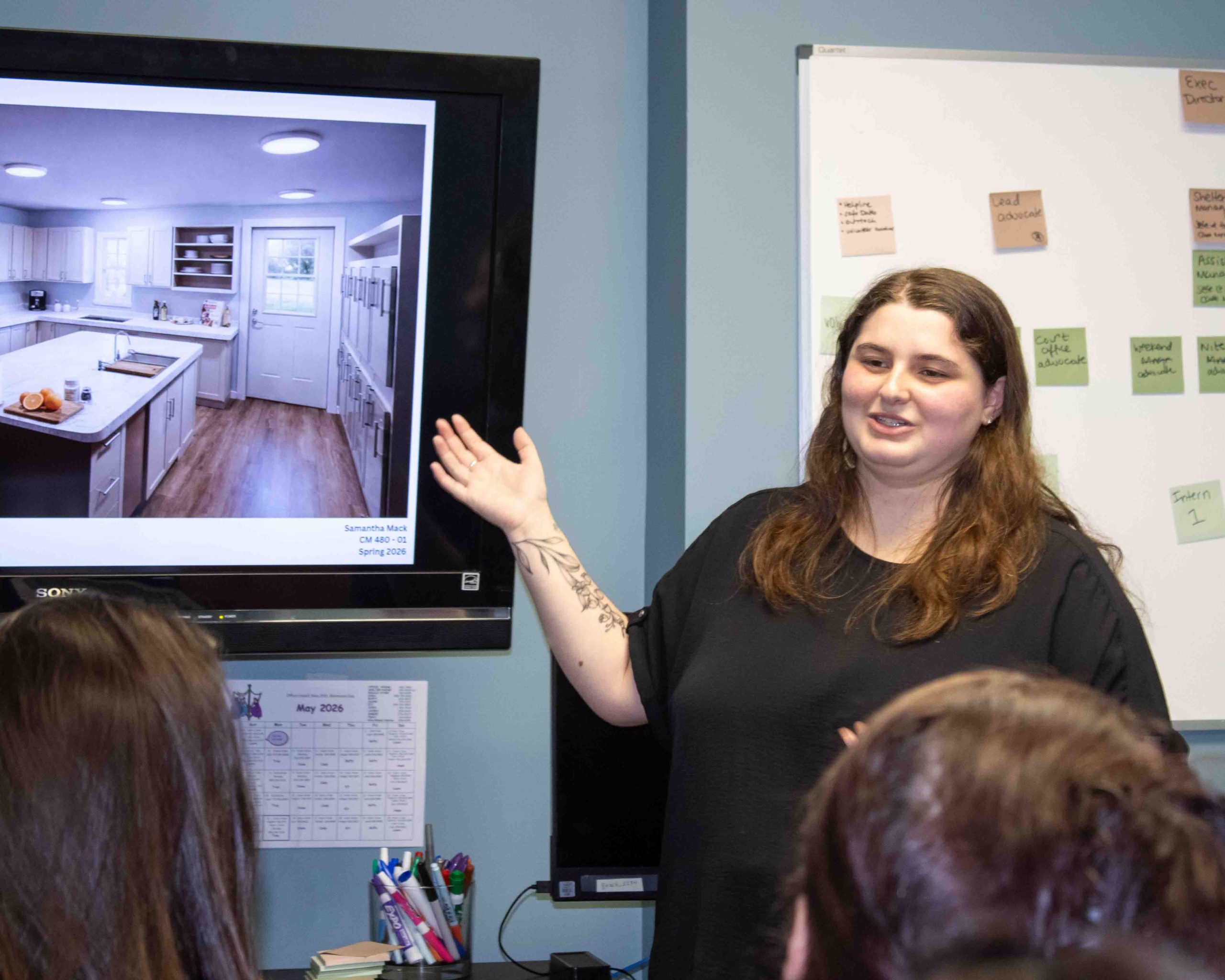
Then this Spring, Samantha Mack, during her last semester as a WCU interior design student with a minor in construction management, delivered a final presentation to REACH with design concepts and possibilities.
“I wanted to give them a product that reflects what’s actually possible with their space as well as with the expansion,” said Mack. “It’s been fulfilling to be able to work with people to help them make their space better and more functional to their needs.”
REACH is a nonprofit organization that offers trauma-informed services, including a 24/7 crisis line, legal advocacy, counseling, prevention education, and Laura’s House, an emergency shelter. For REACH, the shelter expansion is not just a building project—it’s a lifeline, said Sara Vogel, executive director of REACH of Haywood County.
“In recent years, we’ve seen a rise in both the severity and complexity of domestic violence cases,” said Vogel. “More survivors are coming to us with higher levels of trauma and with fewer options for safe, affordable housing. The cost of rent has skyrocketed in our area, and that makes it even harder for victims who want to leave abusive partners to find a place to go. Our shelter is often full, and the need continues to grow.”
Vogel noted that housing insecurity is one of the leading reasons survivors remain in dangerous situations. “Expanding our shelter means we can help more families find stability, safety, and the time they need to rebuild their lives.”
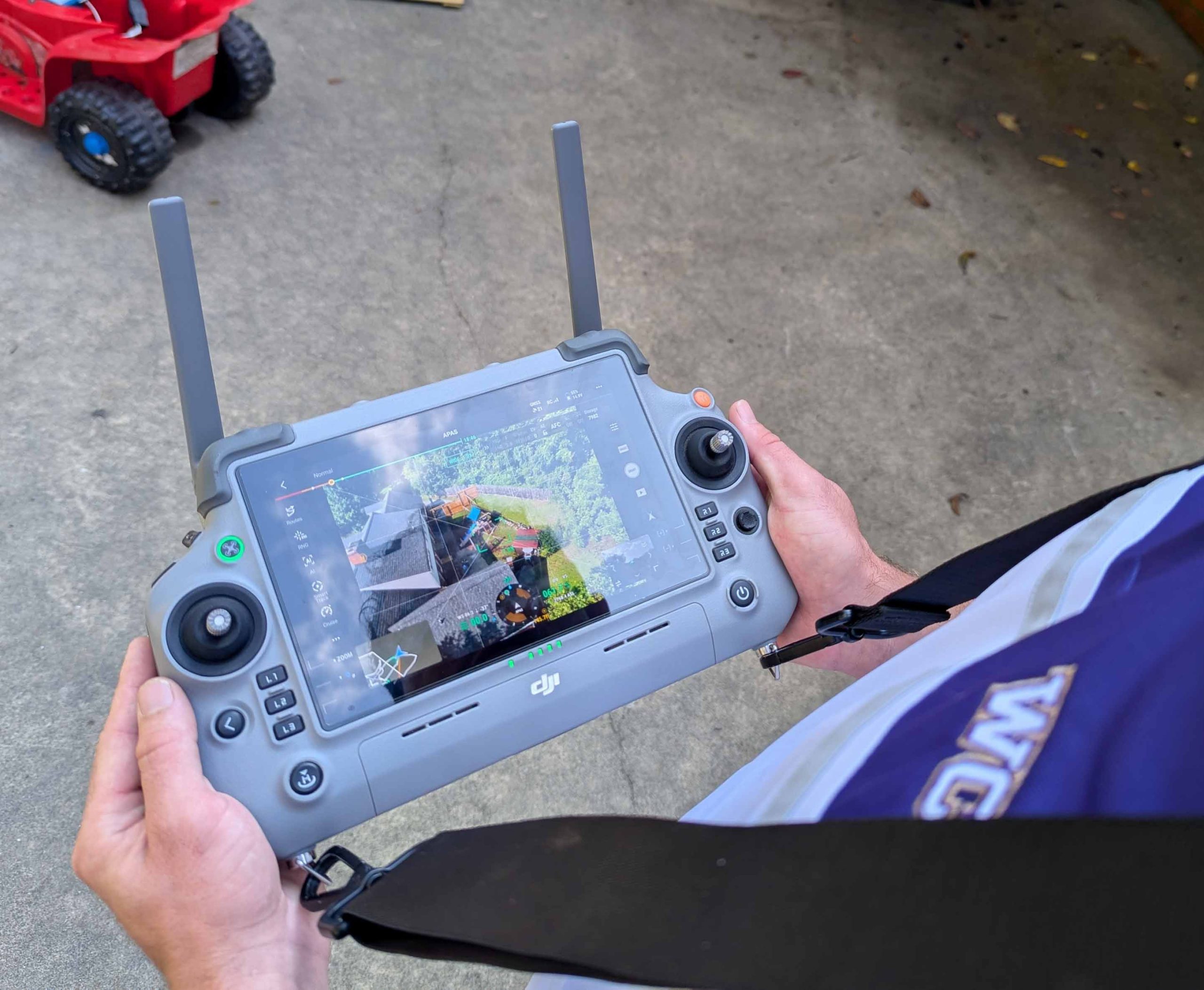
To offer community support, student volunteers used drones to create a 3D external model of the shelter and its property. Others used a 360-degree camera to scan the shelter’s interior, creating 3D interactive models to guide renovation plans, such as which walls could be relocated or how a kitchen could be expanded. Their work will help REACH staff and supporters plan the expansion, engage stakeholders, and aid the project architect.
“The goal is for the architect to be able to upload the model into their system, use what makes sense, and discard what’s not needed — hopefully saving time and reducing costs,” said Chris Cox, a construction management faculty member within the WCU College of Engineering and Technology.
What sparked the involvement of WCU students was a conversation at a WCU Community Engagement and Service Learning panel discussion event several months ago. A leader from REACH shared some of their needs with Cox, and Cox saw an opportunity for students to learn and apply their technological and presentation skills through service.
“We want to help our students develop interpersonal skills, presentation skills, and technology skills that prepare them for successful careers,” said Cox. “And with real-world service projects, meeting deadlines isn’t just important for getting a good grade; it’s important because people are depending on you. I tell students that they will eventually reach a point in their lives where a paycheck won’t be enough. You need purpose, and projects that help people in your community give you purpose.”
Jaden Bird, a WCU alumnus who assisted with the project during his time as a student, said experience with projects including the REACH project deepened his personal connection to the region and his understanding of how construction can serve a greater purpose.
“We get to be a part of the design and pre-construction process to improve this shelter that will help our community stay safe and provide housing to people who are in need,” he said. “I’ve enjoyed being able to make a positive impact. I believe it is essential to give back and use my skills to build a better future for generations to come.”
Vogel said the partnership with Western Carolina University represents more than technical collaboration—it’s about shaping a generation of future builders who understand the human impact of their work.
“There’s tremendous value in having students see how their skills in engineering, design, and construction directly affect people’s safety and well-being,” Vogel said. “They’re not just designing a structure; they’re helping rebuild lives. The work they do here teaches them that their talents can strengthen communities and protect the most vulnerable among us.”
She added that REACH is deeply committed to working with local colleges and universities to foster a more compassionate and socially aware workforce.
“When we invest in partnerships like this, we’re not only improving facilities for survivors,” Vogel said. “We’re helping to develop future leaders who understand that their work—whatever field they enter—has the power to heal, protect, and make lasting change.”
LEARN MORE
To learn more about REACH, visit www.reachofhaywood.org. To learn more about WCU Construction Management Program, visit http://engr.wcu.edu.