
Leslie Anderson
Leslie Anderson, a distinguished long-time civic leader in Asheville, North Carolina, passed away on December 27, 2024, following a brief battle with multiple illnesses. Renowned as a champion of social justice, cultural preservation, early childhood care and education, recreation, and the arts, and deeply devoted to her adopted hometown of Asheville. Ms. Anderson was honored as the 1996 Buncombe County Woman of the Year. Friends, family, and community leaders have hailed her as an irreplaceable treasure of Western North Carolina.
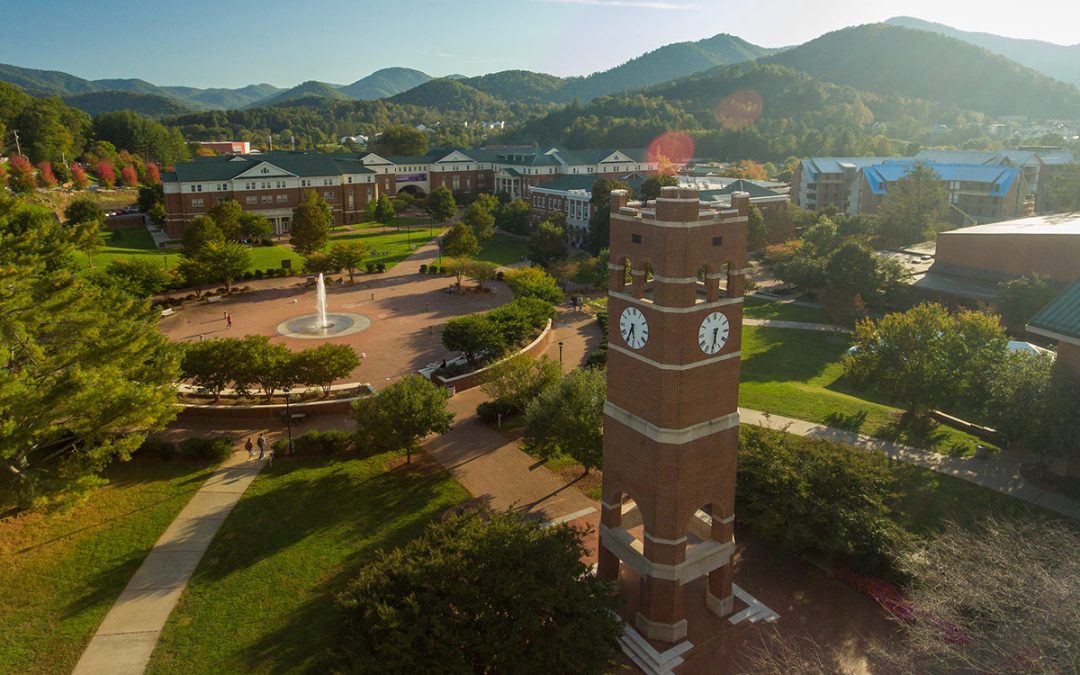
Ms. Anderson was born on June 28, 1950, in Jacksonville, Florida, the first of two daughters of William Knoll Anderson, Jr., and Doris Mae Longstreet Anderson, who predeceased her. An active Girl Scout from an early age, Ms. Anderson’s Girl Scout trip to backpack in western North Carolina during her sophomore year of high school established her love of the region’s mountains, the people, and communities. She returned the following summer to backpack again, and upon graduating from Wolfson High School in 1968, she moved to the area to enroll at Western Carolina University and never left the beautiful mountains.
Upon earning a Bachelor degree in Sociology, later followed by a Master degree in Public Affairs from Western Carolina University, Ms. Anderson embarked on a career dedicated to enhancing her community and the state. Her contributions began with the Pisgah Girl Scout Council, progressed to overseeing youth and cultural arts initiatives for the City of Asheville, and continued with her leadership as Director of the Asheville-Buncombe County Youth Council. Ultimately, she advanced to Superintendent of Recreation for the City of Asheville Parks and Recreation Department.
In 1986, Ms. Anderson was appointed Director of the newly established City of Asheville City Development Office, where she was entrusted with the formidable task of revitalizing the City’s boarded-up and severely deteriorated downtown. Over the course of nine years, she leveraged her exceptional organizational acumen, strategic insight, and ability to foster collaboration to establish a series of public-private partnerships and initiatives. These efforts successfully transformed Asheville into a globally recognized destination for entertainment, culinary excellence, and cultural events. Once-abandoned buildings were repurposed to house thriving businesses, music festivals, restaurants, and breweries, emphasizing their historical significance while embracing modern functionality. Her leadership fostered enduring relationships within the community, culminating in widespread recognition of her transformative impact and profound mourning for her passing.
Despite Ms. Anderson’s humble nature and steadfast belief in the power of collective goodwill, which prompted her to consistently attribute the revitalization of downtown Asheville to a collective effort emphasizing “we” rather than “I,” she is widely regarded as one of the City’s most influential figures. Her visionary leadership permanently transformed Asheville’s history, leaving an enduring legacy of progress and improvement.
Following her departure from city government in 1995, Ms. Anderson formed Leslie Anderson Consulting. Alongside her sister and partner in purpose, Stacy Anderson, she took her expertise national, coaching, mentoring, and guiding more than 200 nonprofit, government, and educational organizations nationwide and as far away as Alaska. She devoted much of her efforts to improving early childhood education first by helping to shape the groundbreaking Smart Start model in North Carolina, then by helping other states replicate its success for their own young children.
Ms. Anderson’s upbringing in historic Mandarin, Florida, a community also associated with notable figures such as Harriet Beecher Stowe and Stetson Kennedy, deeply influenced her values and commitment to community service. This foundation inspired her to teach inclusive governance at the University of North Carolina-Chapel Hill’s School of Government and to contribute her expertise to numerous boards supporting communities, women, children, and underserved populations. Though she sought no recognition for her efforts, she humbly accepted several prestigious honors, including being named one of “Western North Carolina’s 50 Most Influential People of the Century,” a “Distinguished Alumna,” a “Downtown Hero,” and one of Asheville’s “Women Making History.” These accolades reflect the profound impact of her enduring contributions.
Ms. Anderson’s faith was steadfast, inclusive, and unwavering. As a long-time member and leader of St. John’s Episcopal Church and a former member of the Episcopal Diocese of Western North Carolina Executive Council, she dedicated herself to tireless volunteer work and to supporting those in need. Her deeply held beliefs were encapsulated in a church bumper sticker she shared, which succinctly proclaimed, “God loves everyone. No exceptions.”
The passing of Ms. Anderson has inspired a wealth of stories, reflecting one of her favorite pastimes, storytelling. Those whose lives she touched recount heartwarming, humorous, and inspiring anecdotes that highlight her remarkable character and boundless generosity. Her vibrant charm, infectious laughter, and unwavering determination to encourage others toward compassion and integrity will resonate with friends, family, colleagues, and citizens for generations to come.
Ms. Anderson is survived by her sister, Stacy Anderson; sister-of-her-heart, Rom Yoeun; cousins Beth Stephens, Craig Yeagle, Dana Longstreet, Virginia Yeagle, and Bill Longstreet IV; and their respective extended families. She is also survived by her beloved godchildren who brought her so much joy, Jennifer Leslie Bauer, Christopher Bauer, Hawkins Maag, and Sara Yoeun (another godchild, Adam Yoeun, predeceased her) and the scores of people throughout Asheville and beyond who regarded her as a member of their own family.