What started as a class project in ENGR 350 quickly became a lesson in resilience, collaboration, and self-discovery for a multidisciplinary student team tasked with developing a turbidity monitoring device.
At the start of the semester, each student in “Engineering Practices & Principles III” pitched ideas for a potential project. Cailyn Spratt, a civil engineering student from Ellenboro, shared an idea based on her previous work for a general contractor. Part of her role involved erosion control inspections on construction sites, and she was interested in developing a portable, efficient device that would measure turbidity of water at Stormwater Drain Outlets or SDOs. Measuring turbidity could help determine whether erosion control systems on construction sites are working as intended, she said.
“If the turbidity or water clarity exceeded a safe level, then inspectors could go back and check the Best Management Practices in the surrounding area to identify where the problem originated,” said Spratt.
The project was selected, and Spratt was part of a student team that took on the challenge. Unfortunately, partway through the semester, they lost a critical team member.
“The biggest roadblock was losing our electrical engineering team member when the project was about 75% electrical work,” she said. “Thankfully, he left us with enough information to continue moving forward. The rest of us—a civil engineering student, a mechanical engineering student, and an engineering technologist—had to do a lot of independent research to compensate.”
Challenges Accepted
Dawson Williams, an engineering technology student from Hendersonville, said the team divided up the electrical tasks that needed to be completed and asked for help from another team’s electrical engineering students.
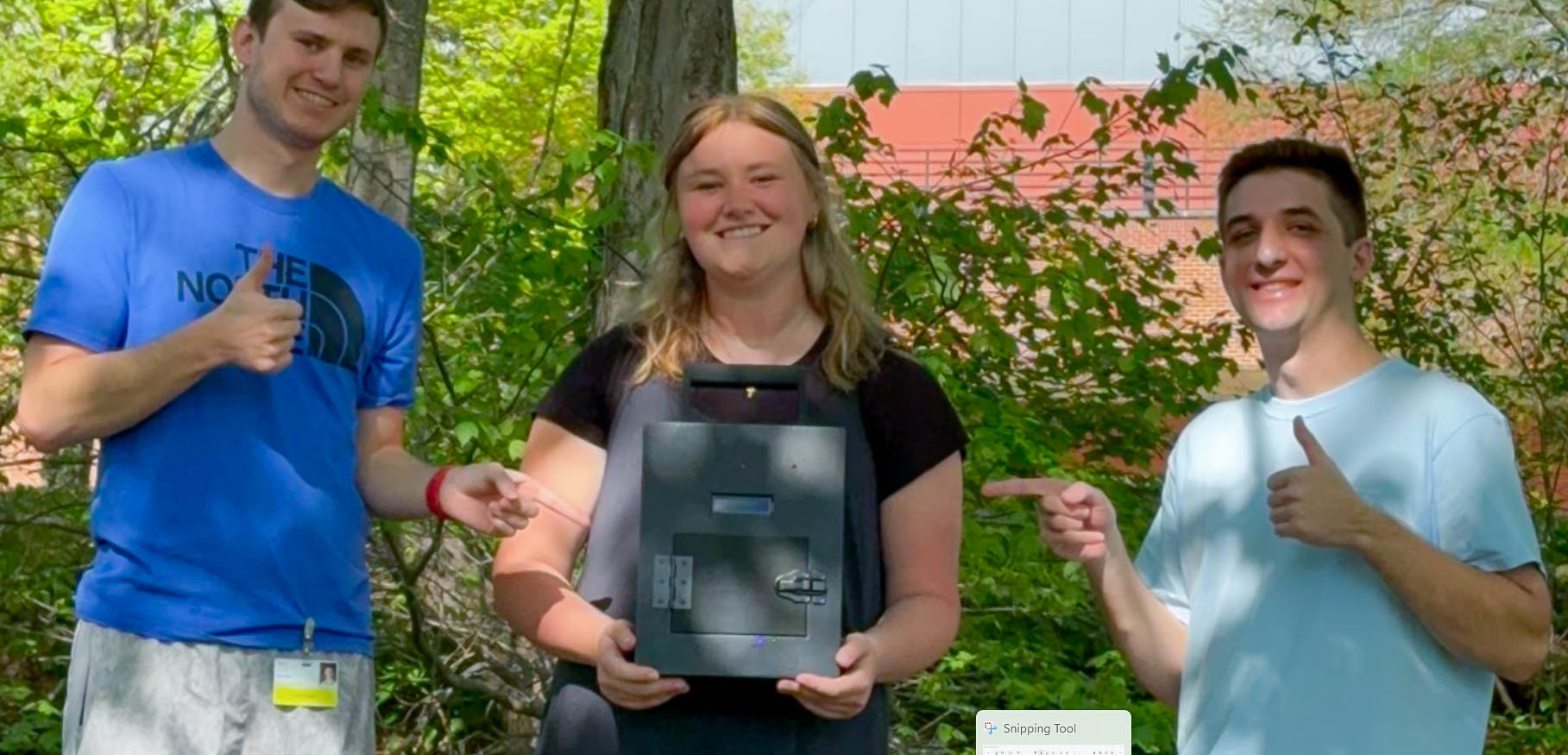
“They were able to help get the basic electrical components up and working for us,” said Williams.
Despite the challenges, or perhaps because of them, the experience strengthened the team dynamic.
Spratt said, for her, the most enjoyable part of the project was working with her teammates.
“They were supportive, hardworking, and made the experience much more rewarding throughout the semester,” she said.
What They Learned
Williams said the project stretched each of their abilities. Team members talked about learning more about coding, circuits, soldering, and software.
Luke Young, a mechanical engineering student from Hickory, added that they all, through the experience, learned more about each other’s majors and concentrations, “recognizing the importance of each discipline within the engineering world.”
Spratt said it also taught her one of the most important skills an engineer can have: adaptability.
Martin Tanaka, professor of mechanical engineering, said the team did a fantastic job.
“They were really concerned when they lost their teammate, but when members from another team jumped in to help, they became inspired,” Tanaka said. “It really shows the collaborative spirit at WCU.”