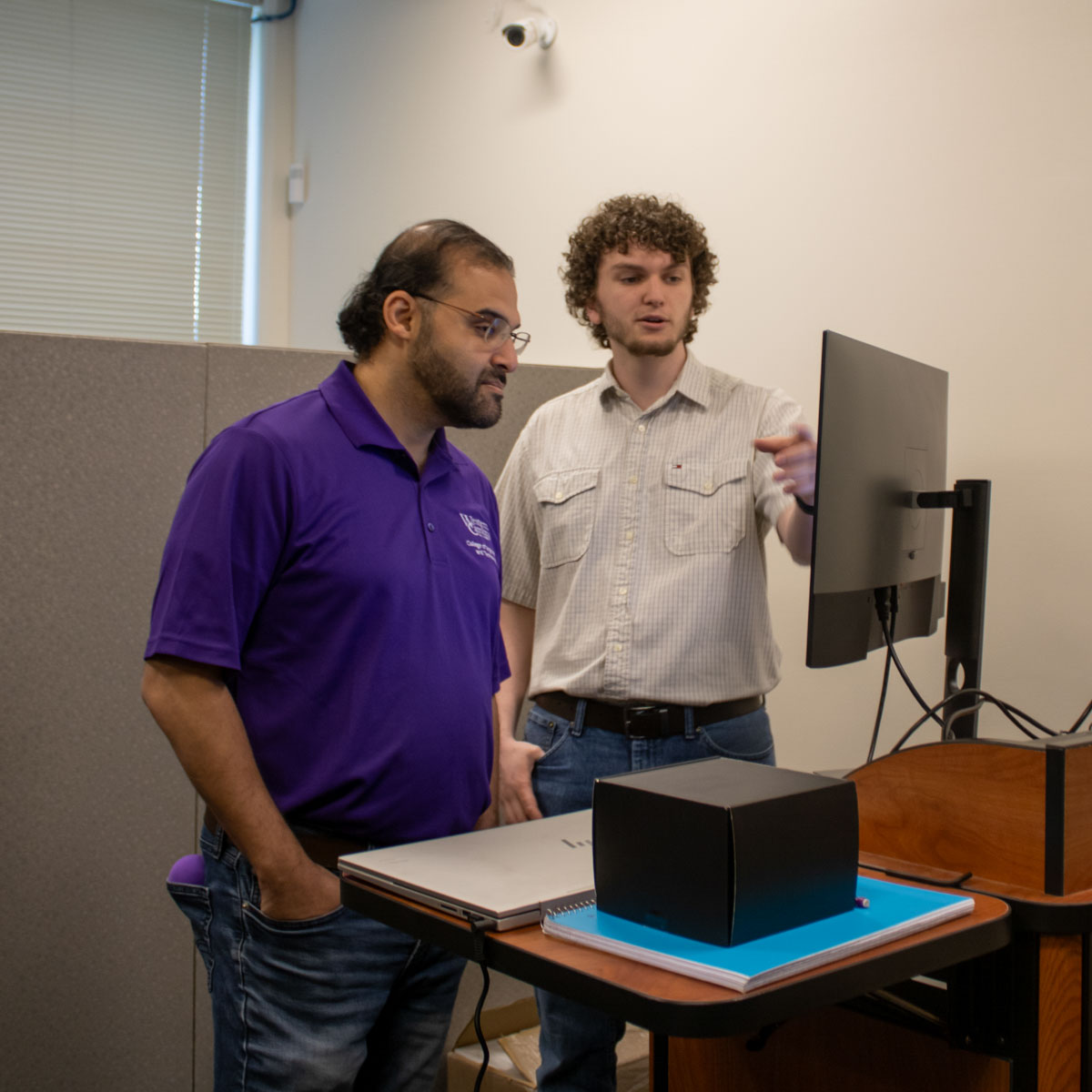
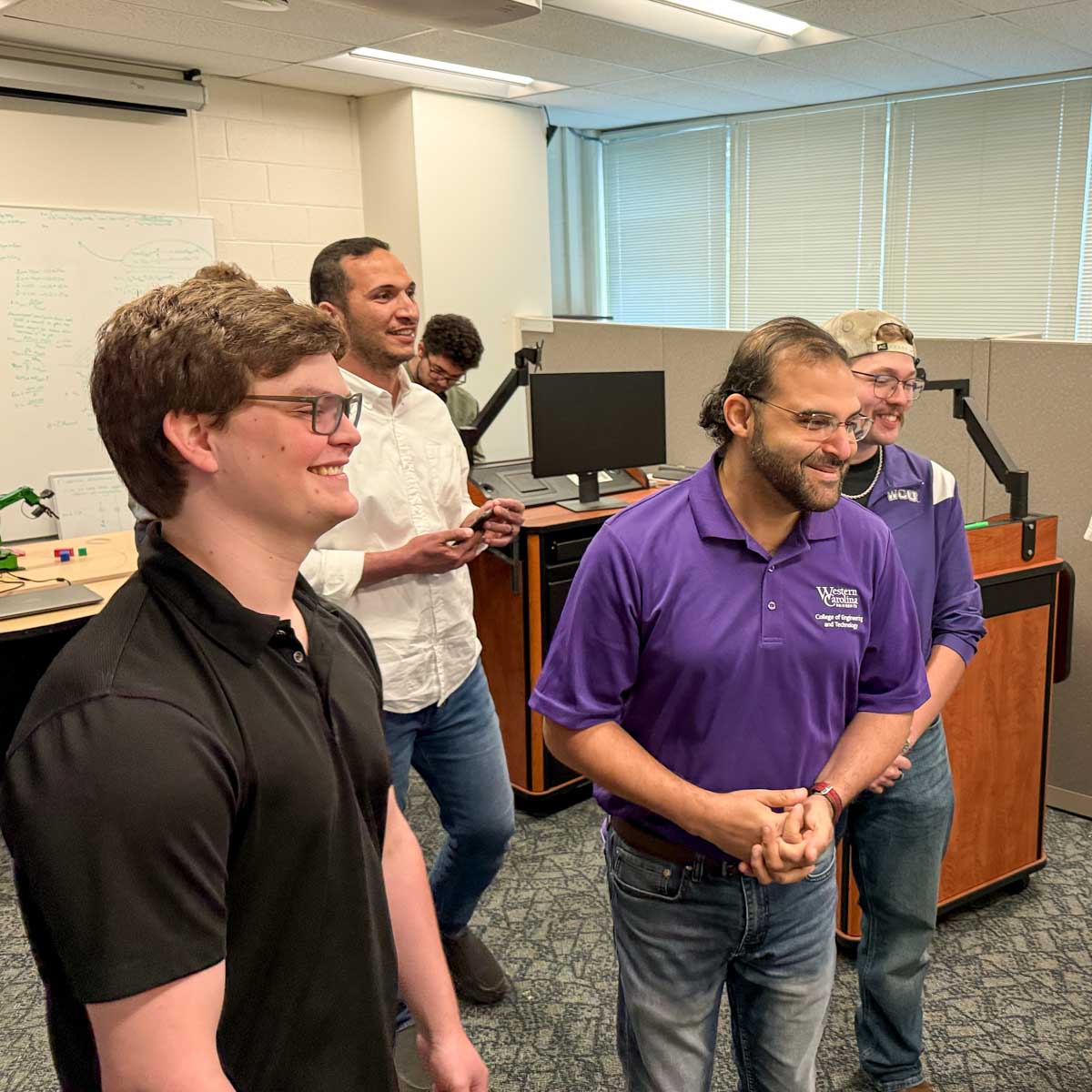
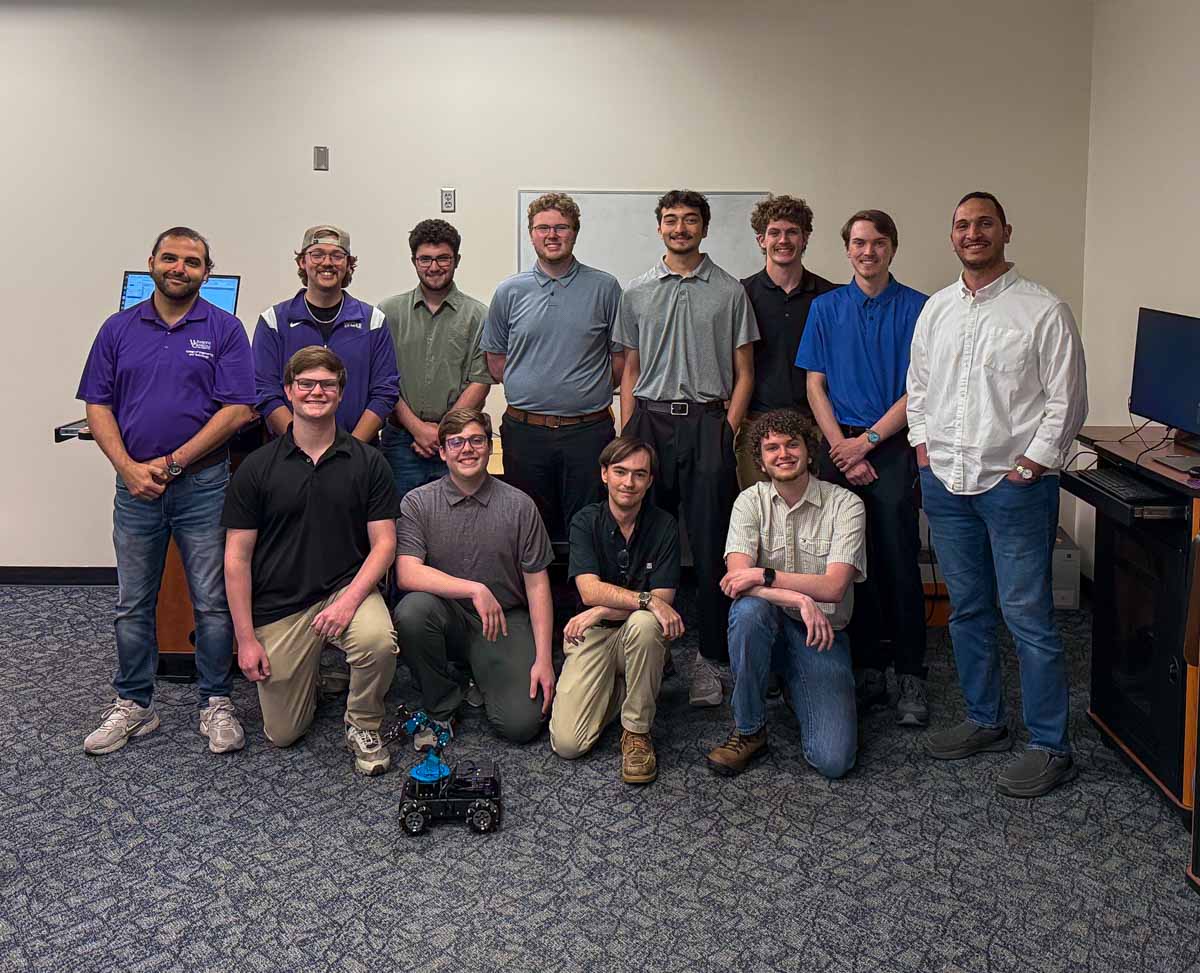
Students in Western Carolina University’s ENGR 493 course, “AI and Computer Vision for Smart Manufacturing,” gained hands-on experience at the intersection of artificial intelligence and robotics—preparing them for careers in a rapidly evolving industrial landscape.
Taught by Dr. Abdallah Abdallah, associate professor in the WCU College of Engineering and a certified NVIDIA Deep Learning Institute (DLI) instructor, assisted by Co-PI Dr. Islam Elgarhy, assistant professor, the course challenged students to design, program, and integrate robotic systems capable of automating real-world manufacturing processes.
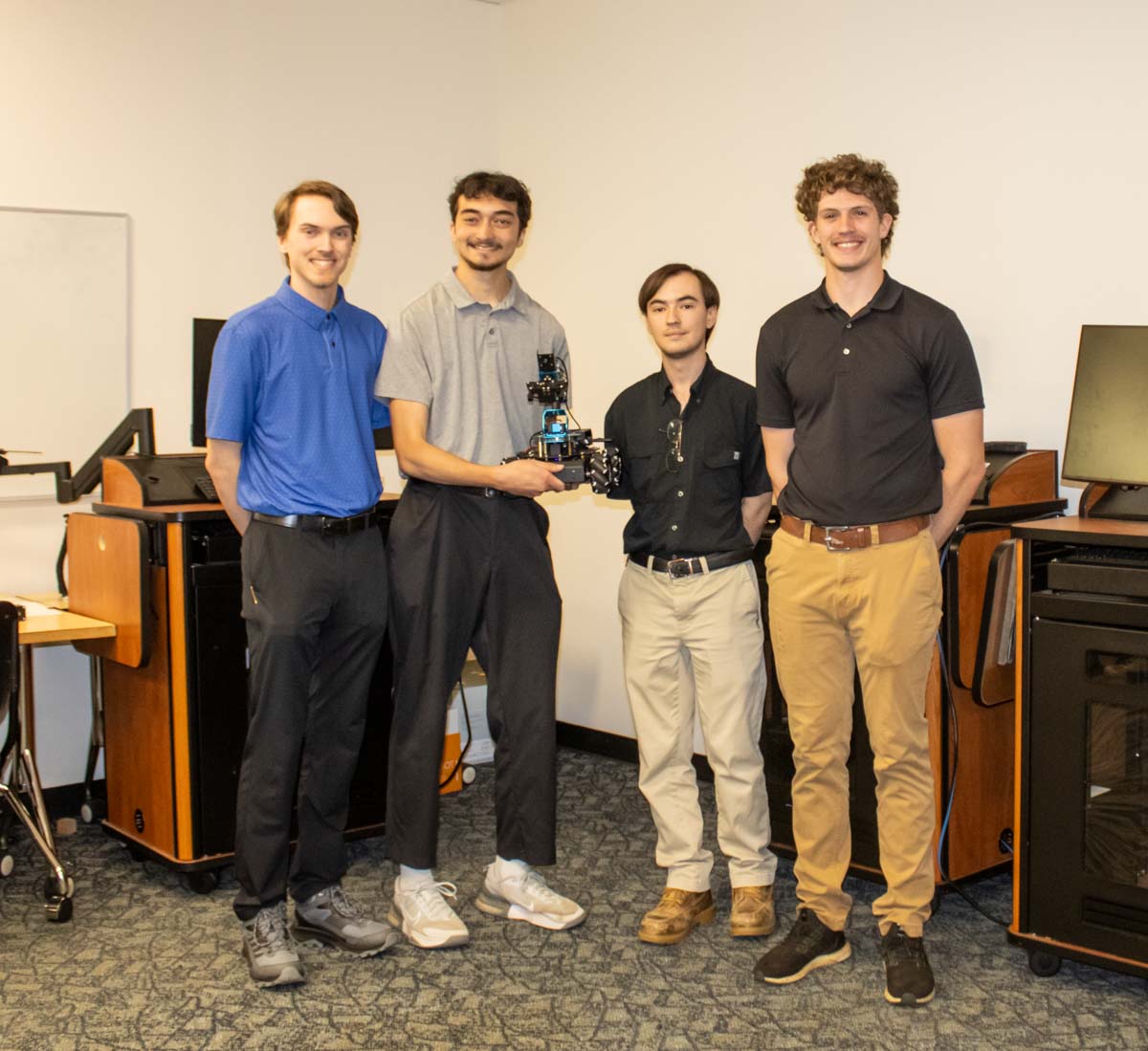
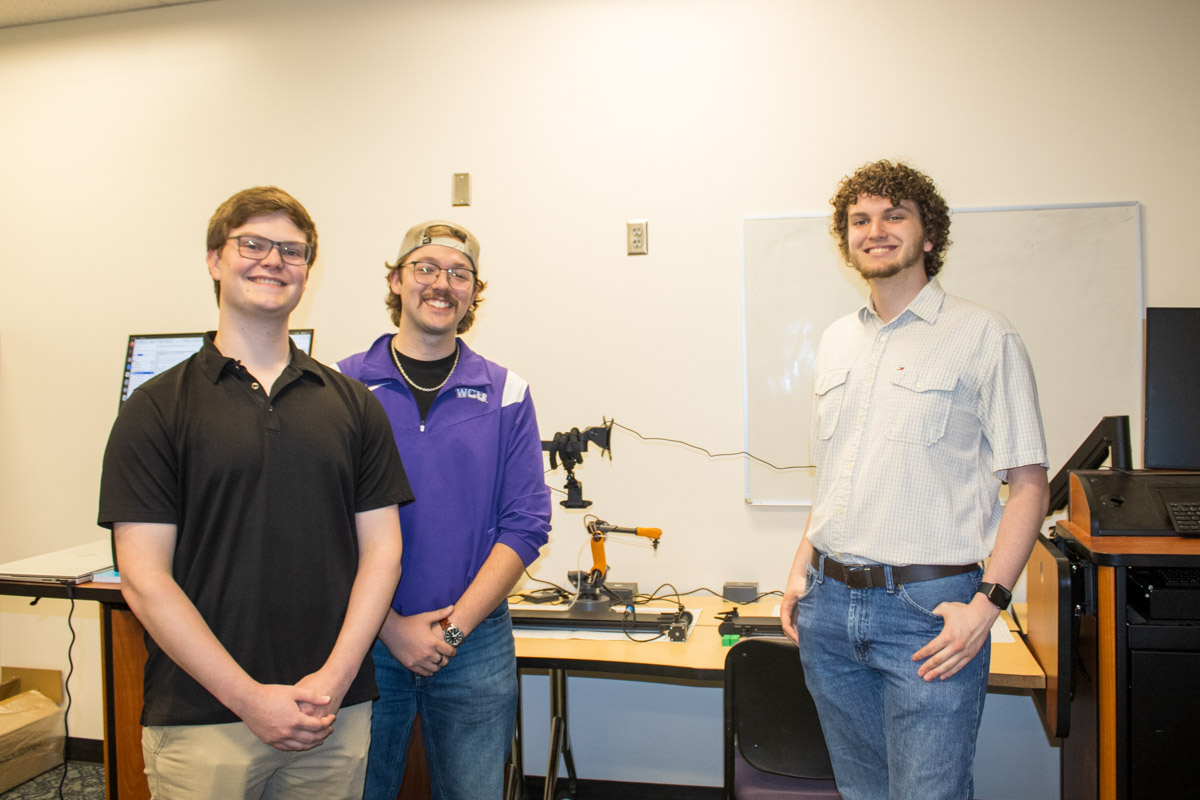
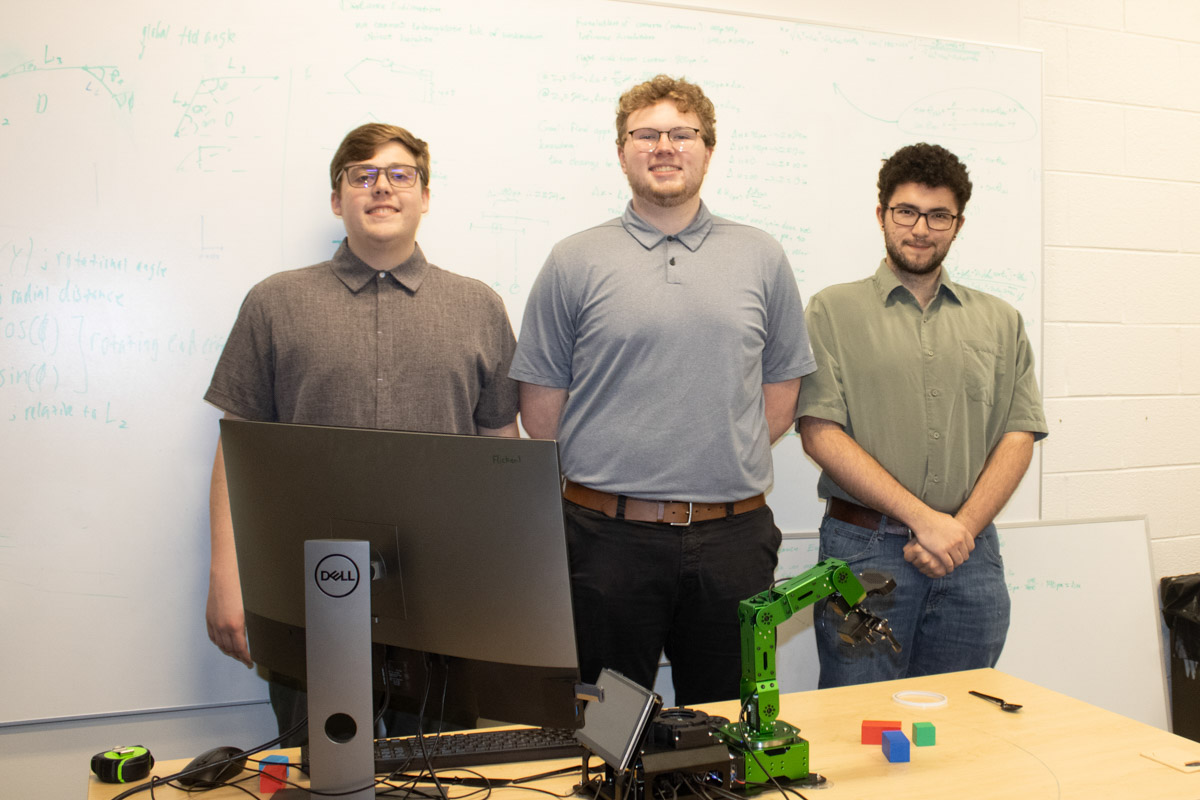
Working in teams, students developed three distinct robotic systems, which they named HULK, MEDUSA, and OPTIMUS.
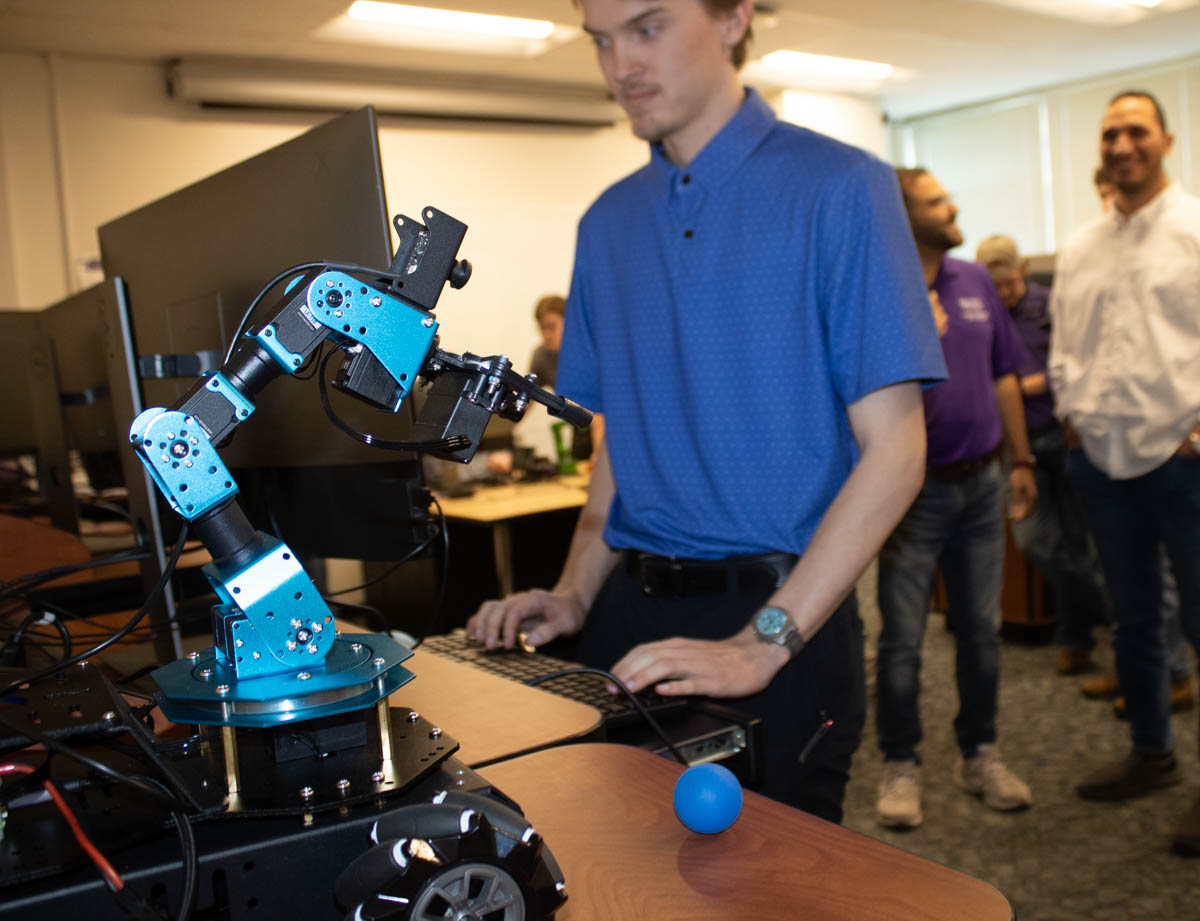
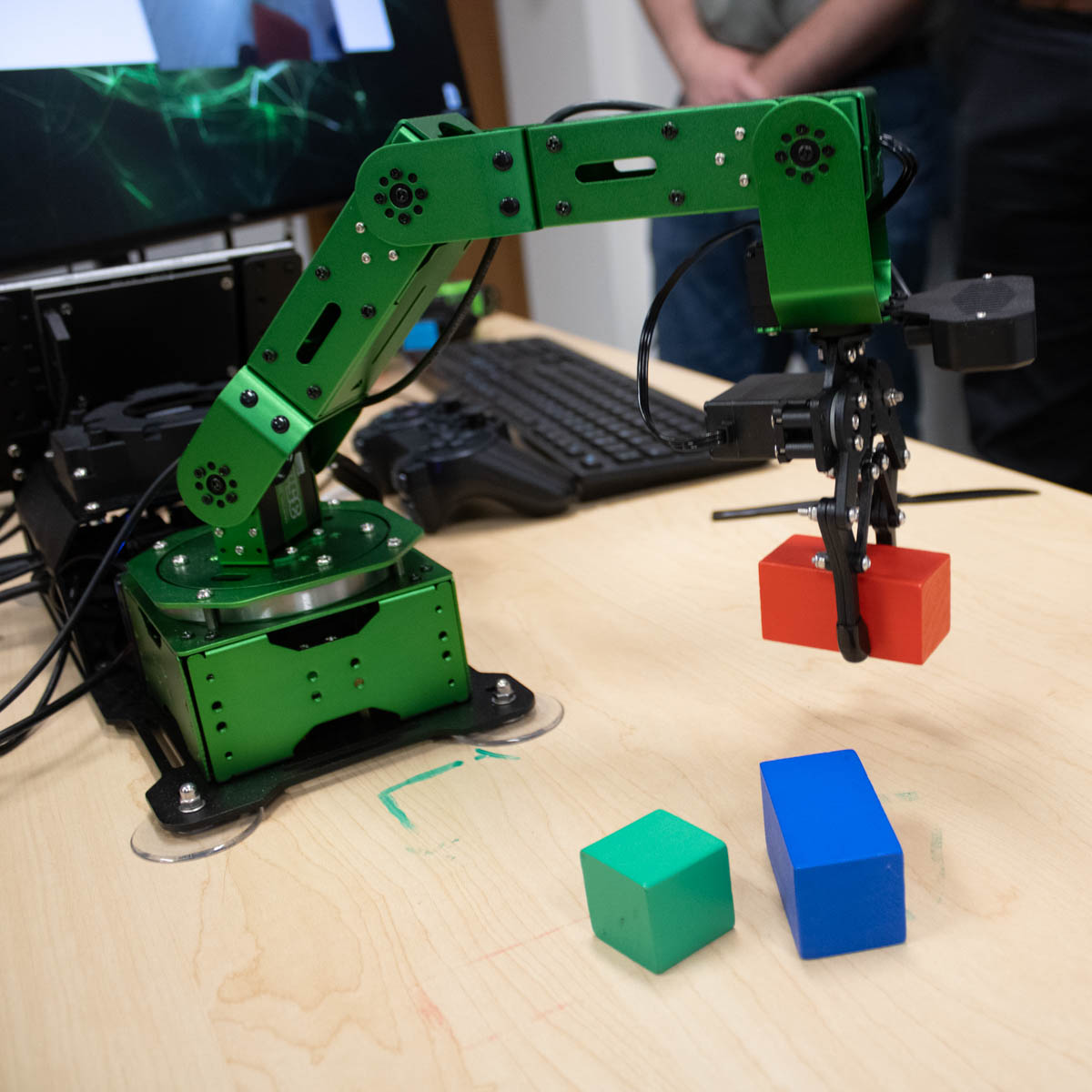
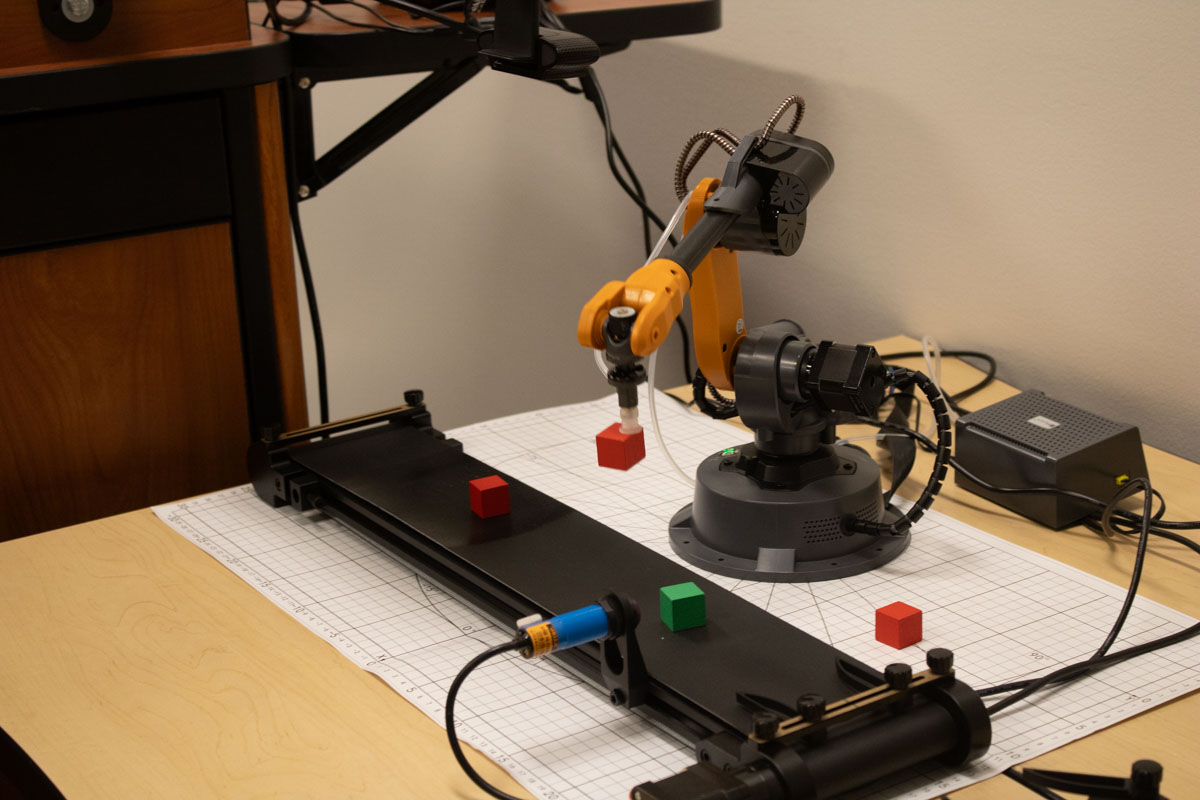
One team built MEDUSA, training two identical robots to collaborate to identify an item of a certain color on a conveyor belt and remove it—simulating the removal of defective items from an automated production line. Another team developed HULK, which used a machine learning classification model to recognize utensils as visual cues, then pick and reposition the specific colored block designated to each cue. A third team created OPTIMUS (a mobile vehicle equipped with camera and robot arm), focused on object detection and motion tracking; using an AI model, the robot identified and followed a ball, then executed a coordinated sequence to approach and retrieve it.
Students described the experience as both challenging and rewarding, highlighting the complexity of integrating hardware and software while working under real-world constraints.
The course is supported by a $35,000 Undergraduate Research Program Award from the UNC System, which enables students to gain valuable, hands-on research experience. This initiative reflects the growing importance of Industry 4.0 technologies, where AI-powered systems are increasingly used in factories and warehouses.
During the summer, some students will continue to expand these projects, developing more advanced AI-based control algorithms and exploring additional applications for robotic automation.
As manufacturing continues to evolve, courses like ENGR 493 ensure that students graduate with the interdisciplinary skills needed to design, program, and maintain the intelligent systems shaping the future.
RELATED LINKS