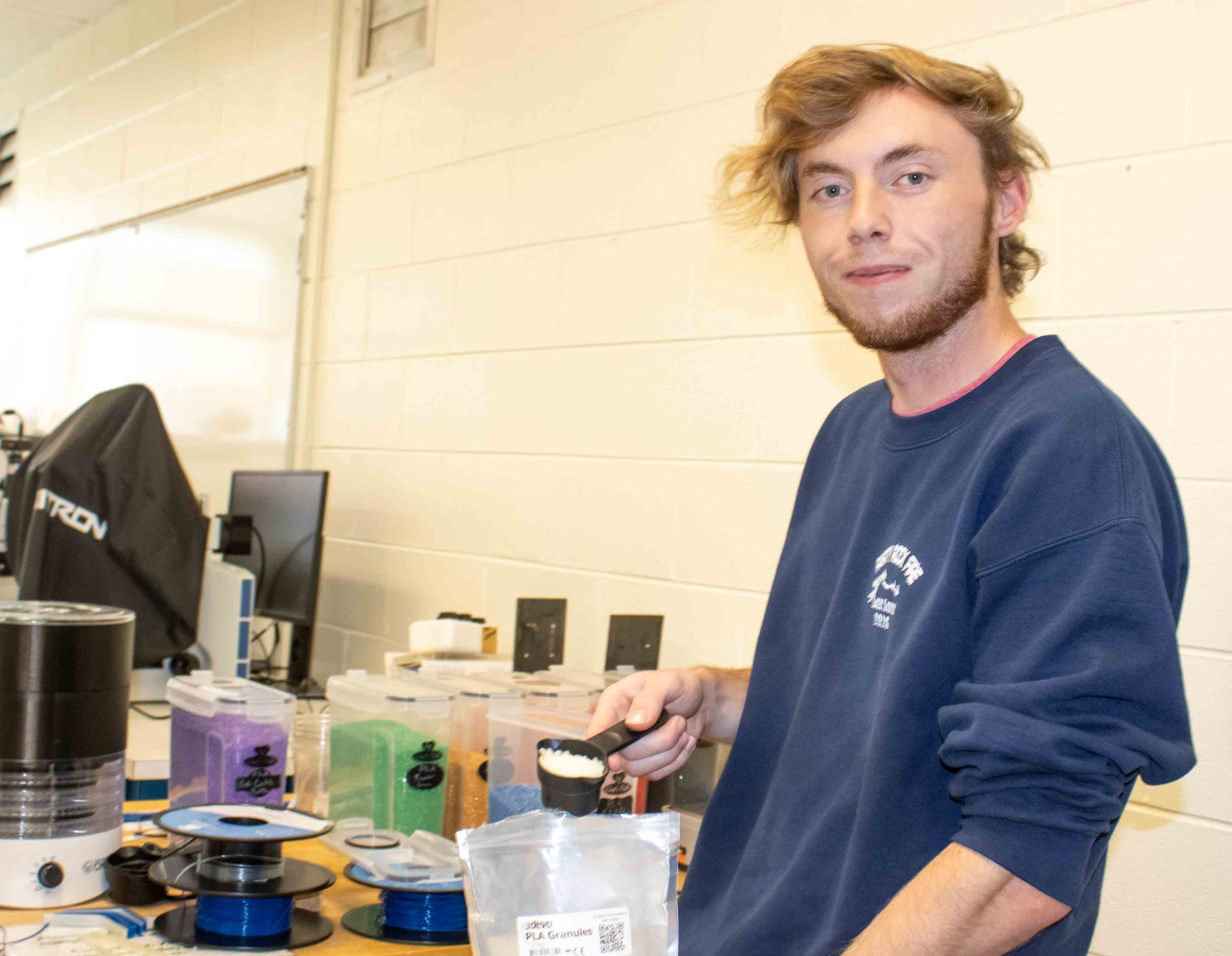
As 3D printing becomes increasingly common in education, industry, and manufacturing, one important question remains: What happens to the plastic waste?
For Caleb Cole, an M.S. in Engineering Technology student from Asheville, the answer may lie in creating a closed-loop recycling system that transforms discarded 3D printing material into new, usable filament.
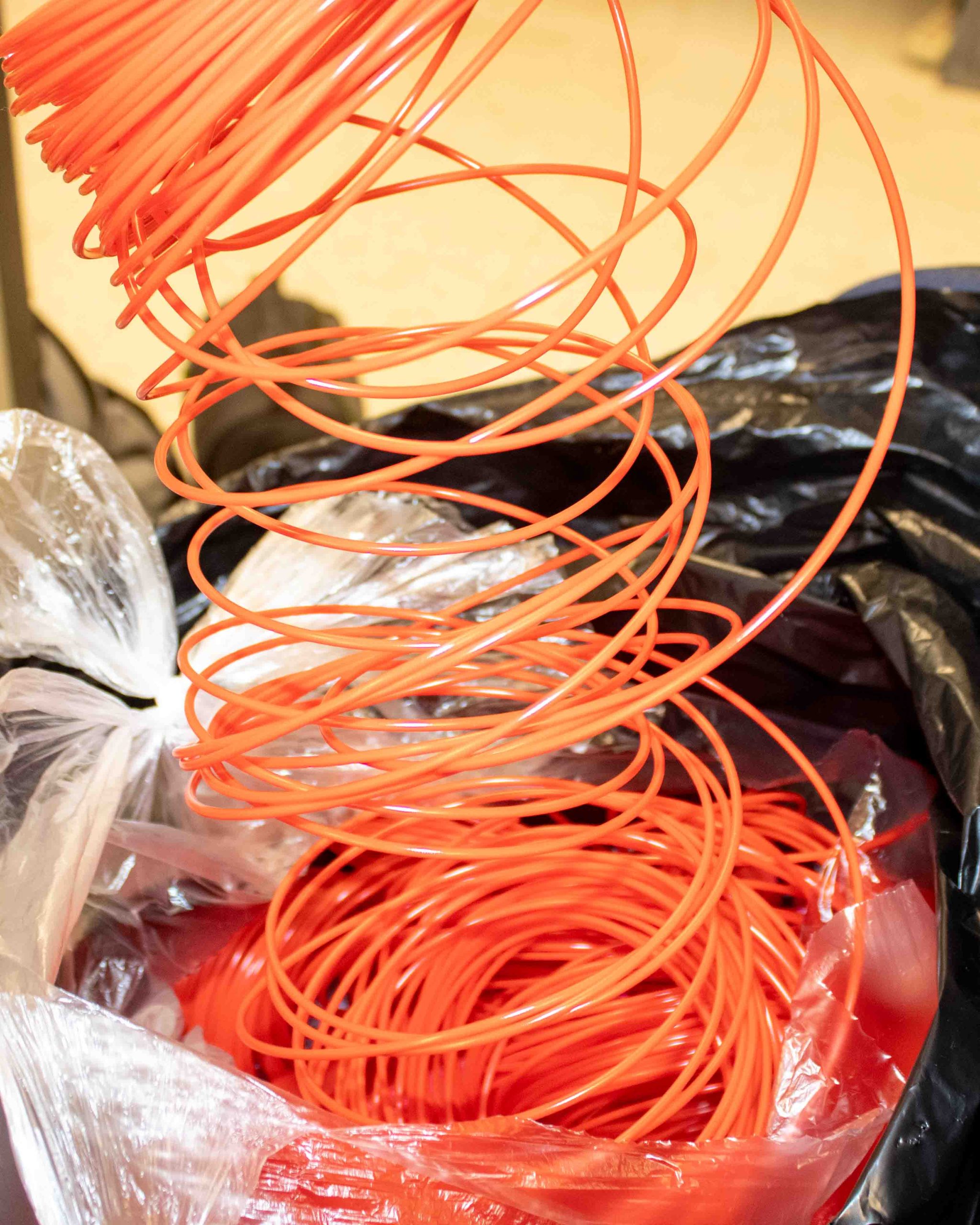
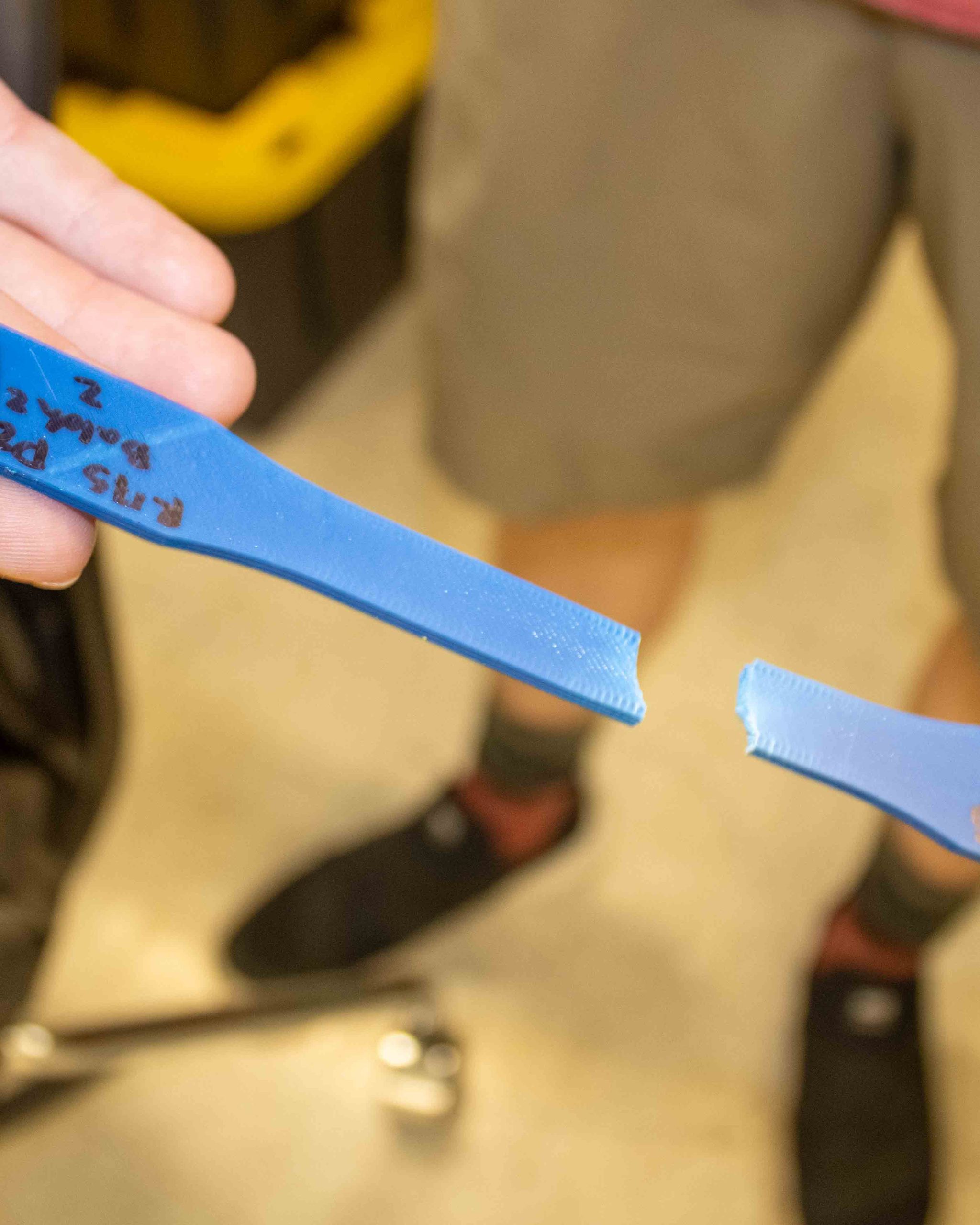
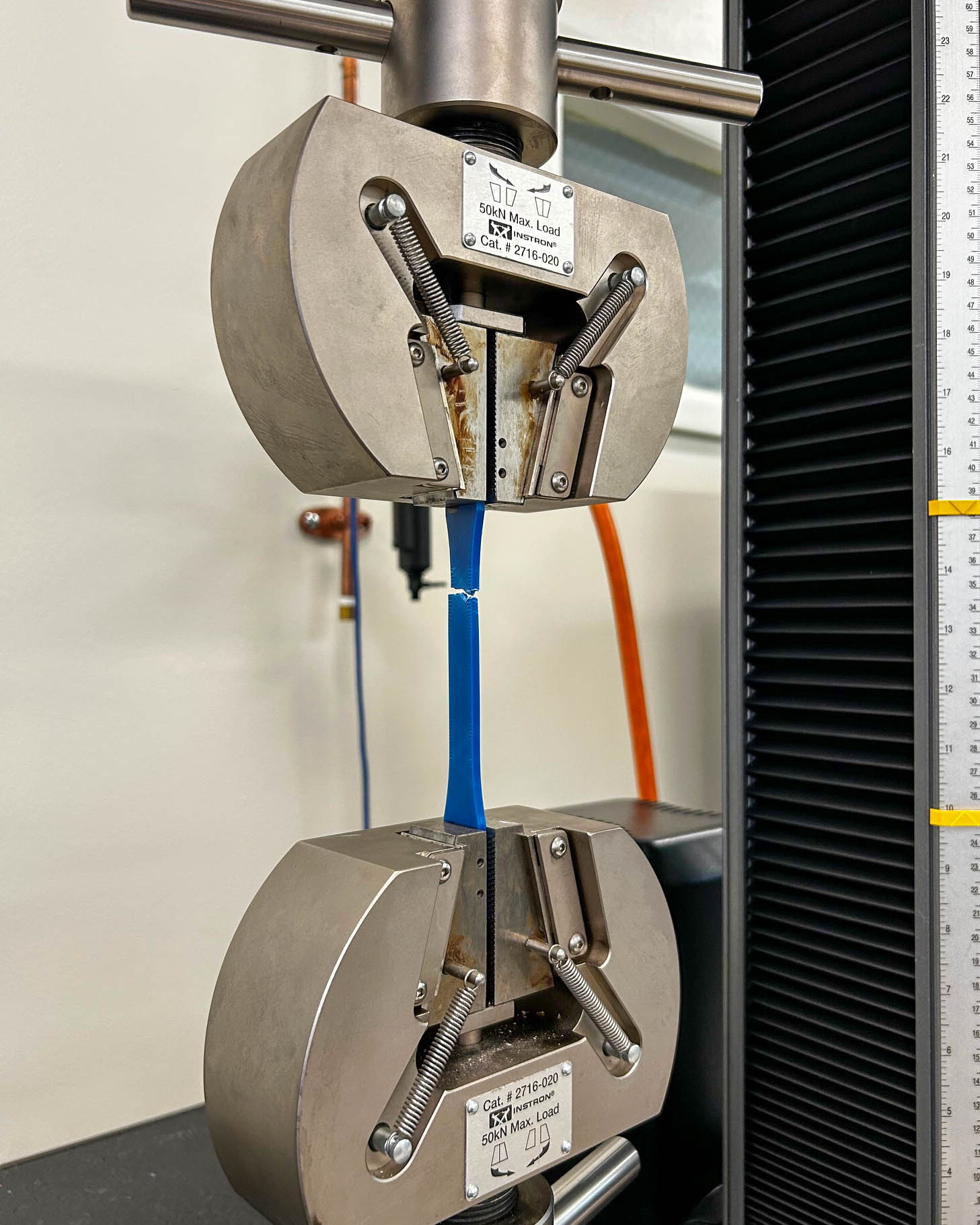
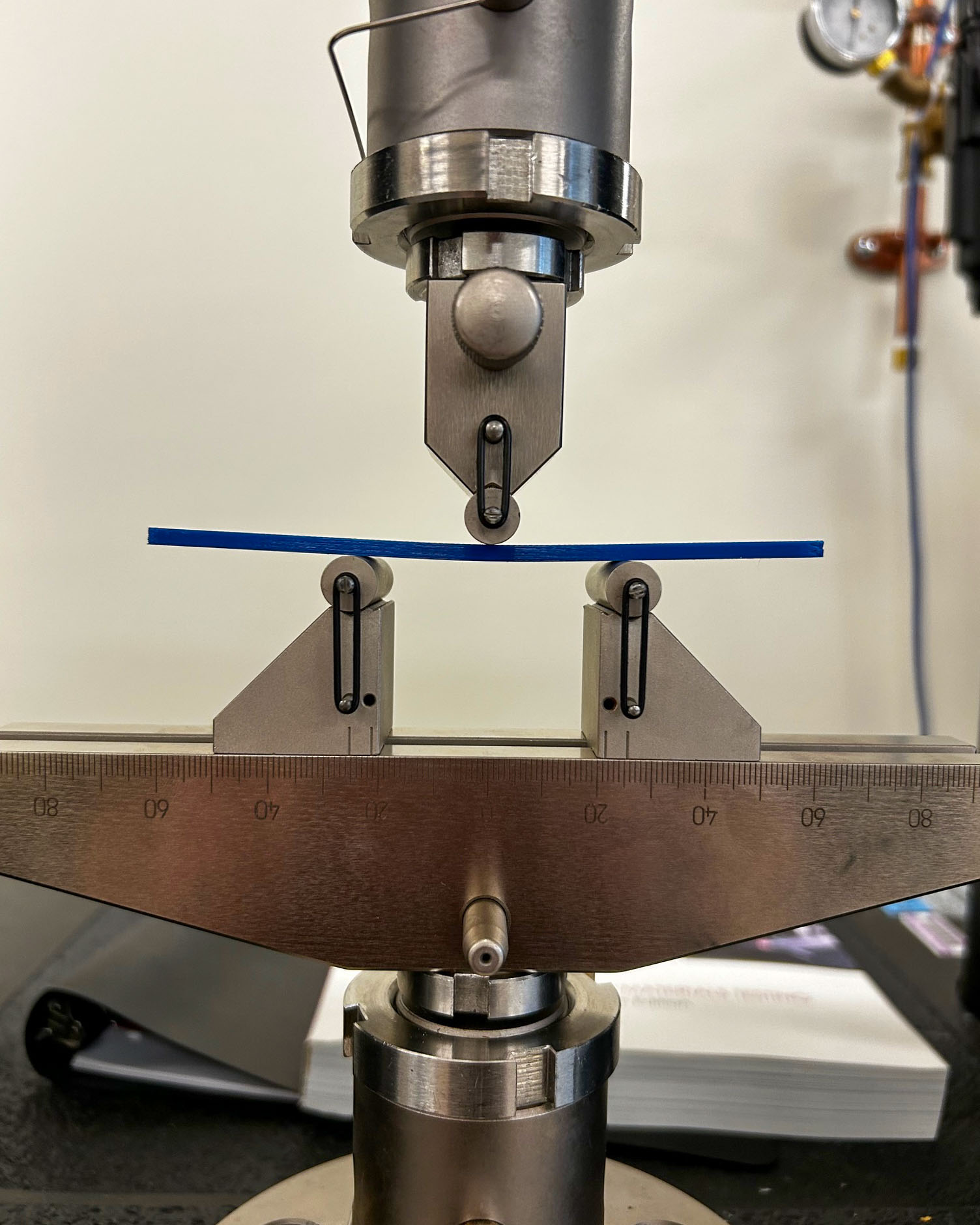
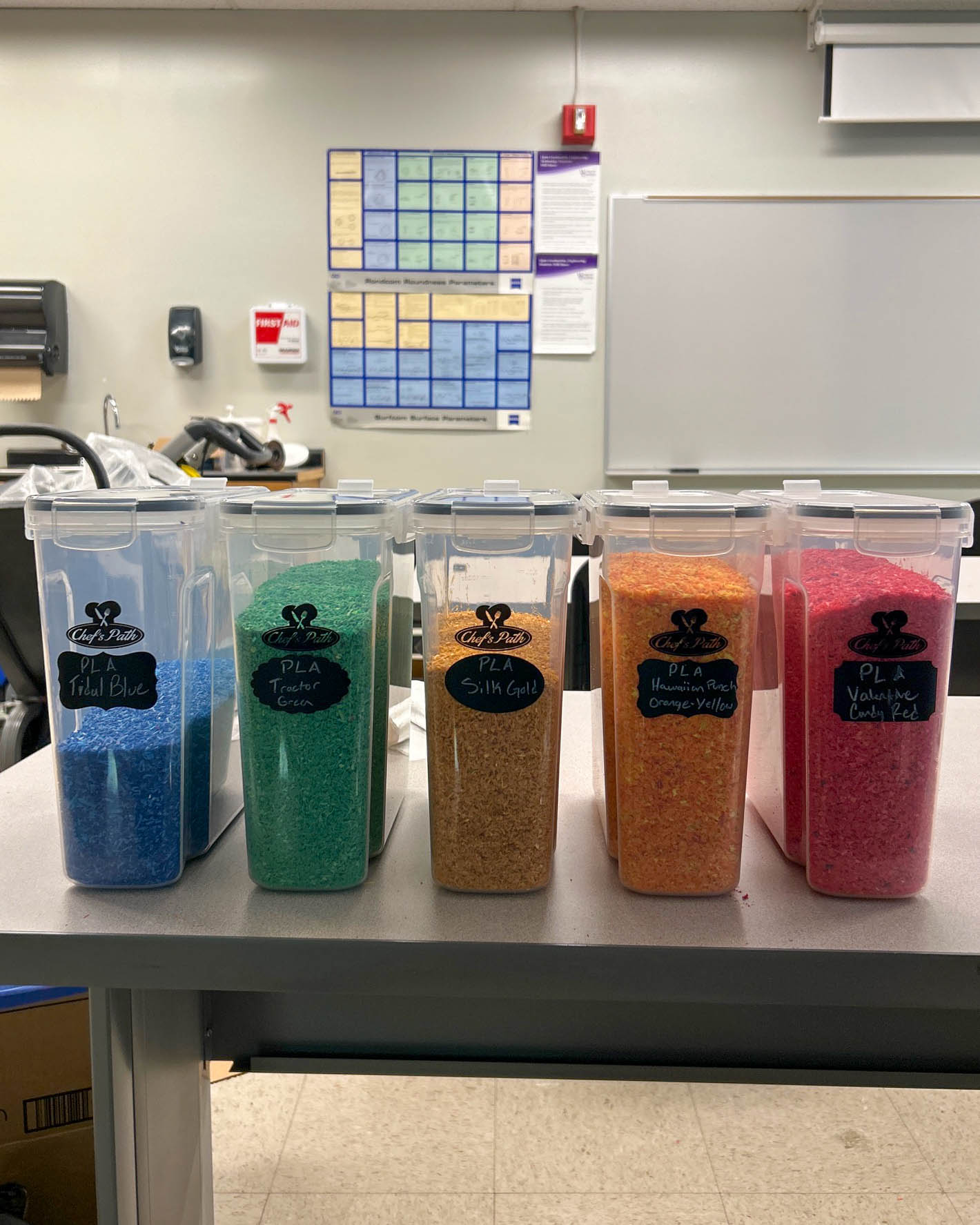
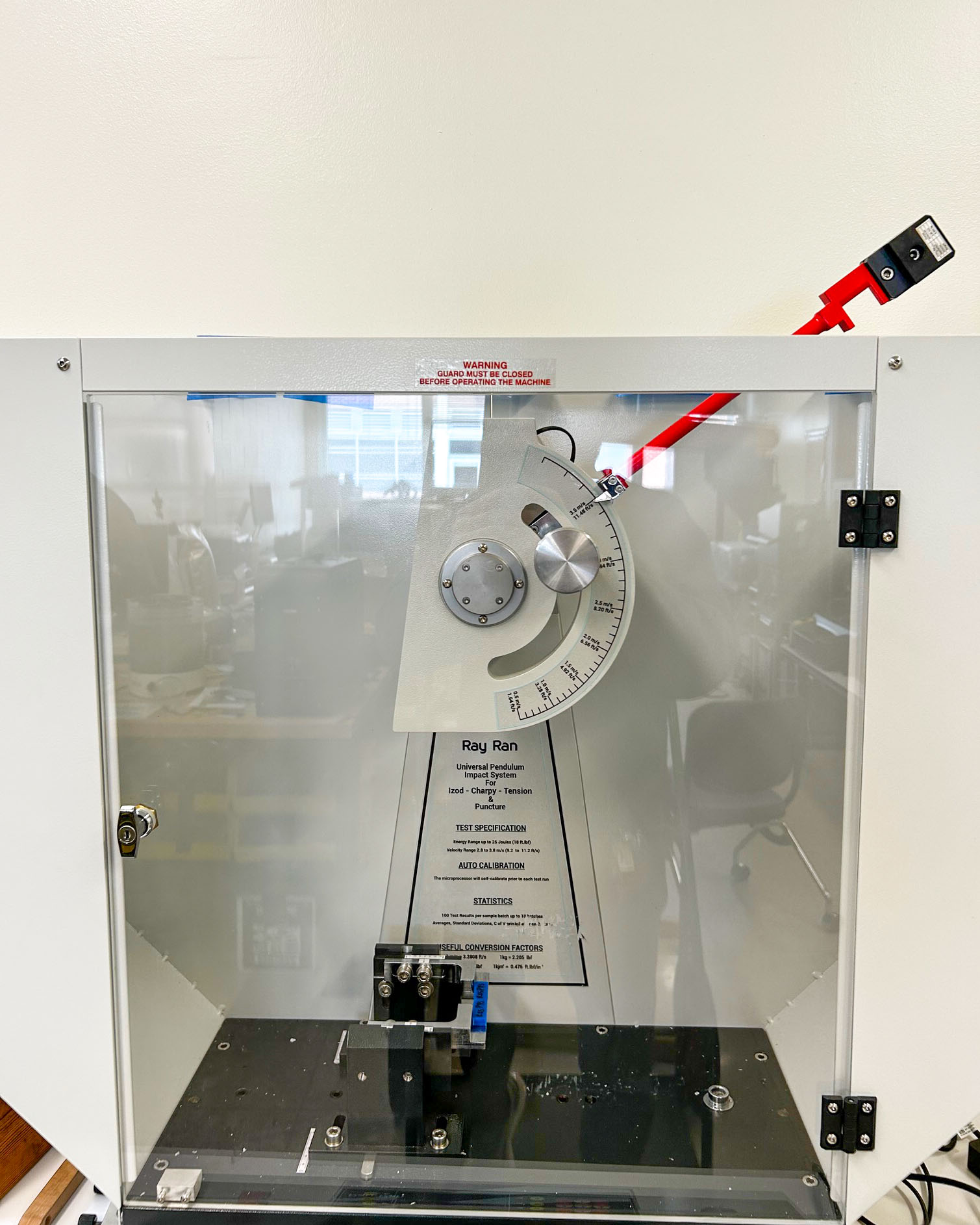
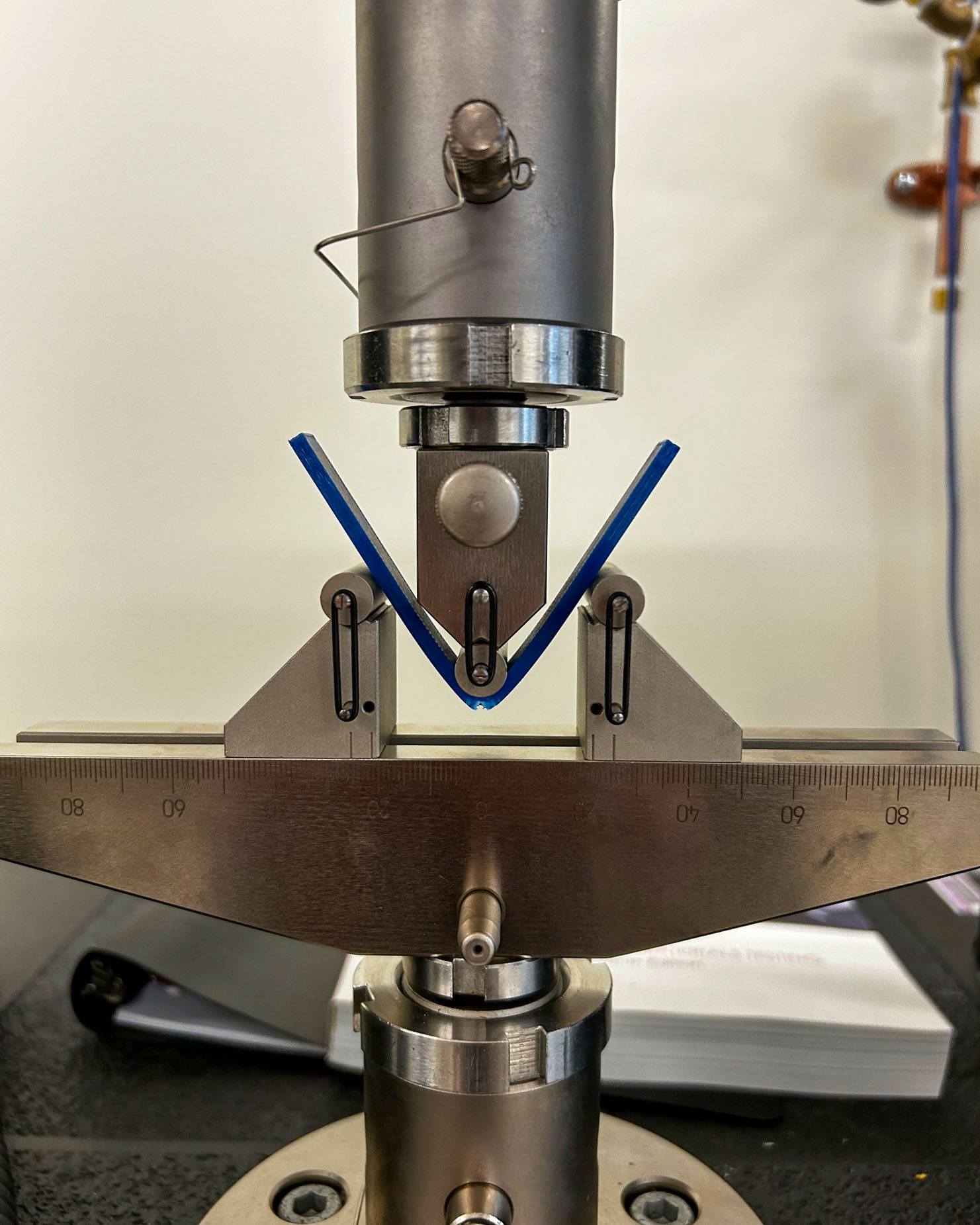
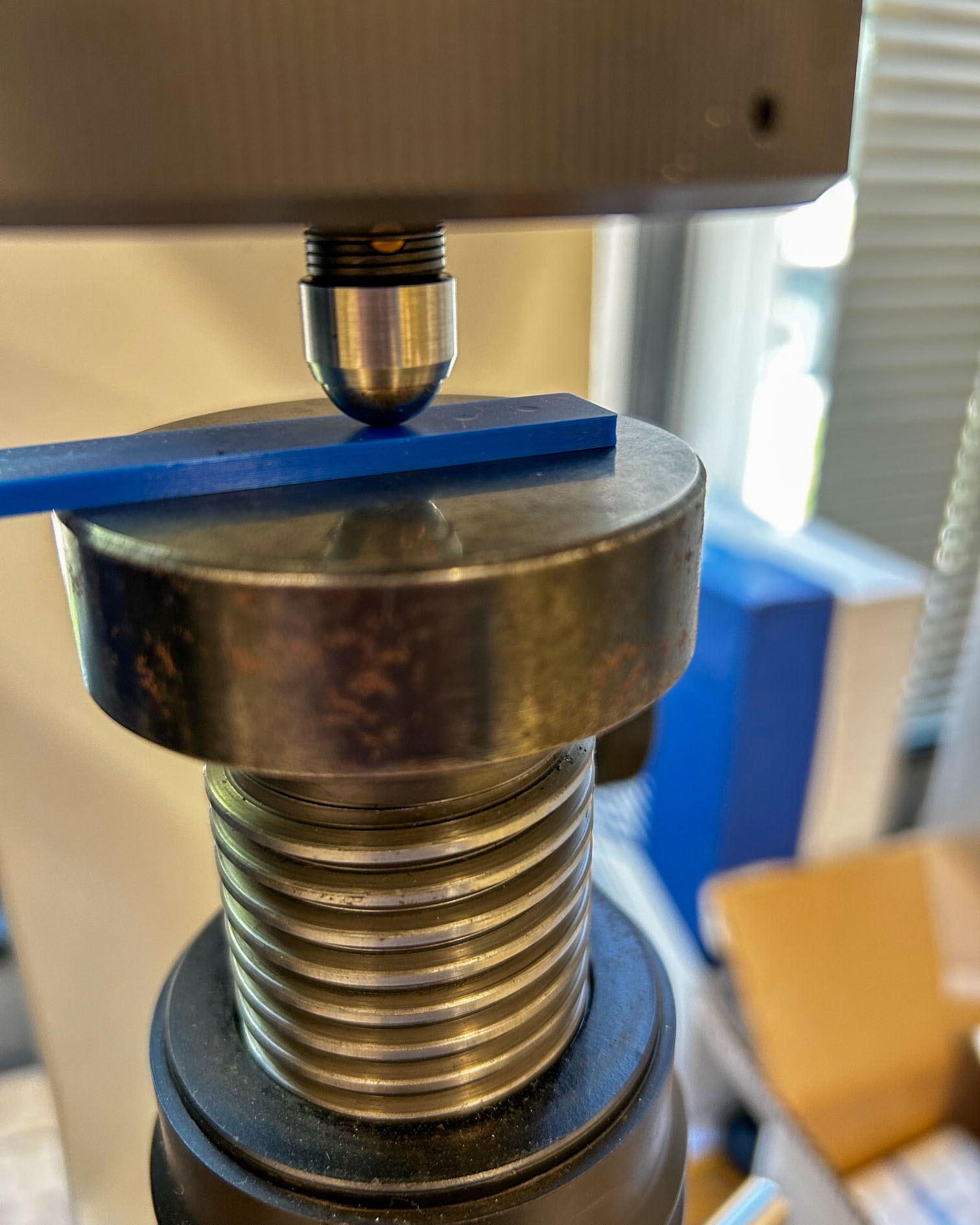
With support from Dr. Yang Zhang and building on work started by student-now-alumnus Ariel Colon Rodriguez, Caleb is continuing his research this summer into sustainable methods for managing 3D printing waste while maintaining — and in some cases improving — material performance.
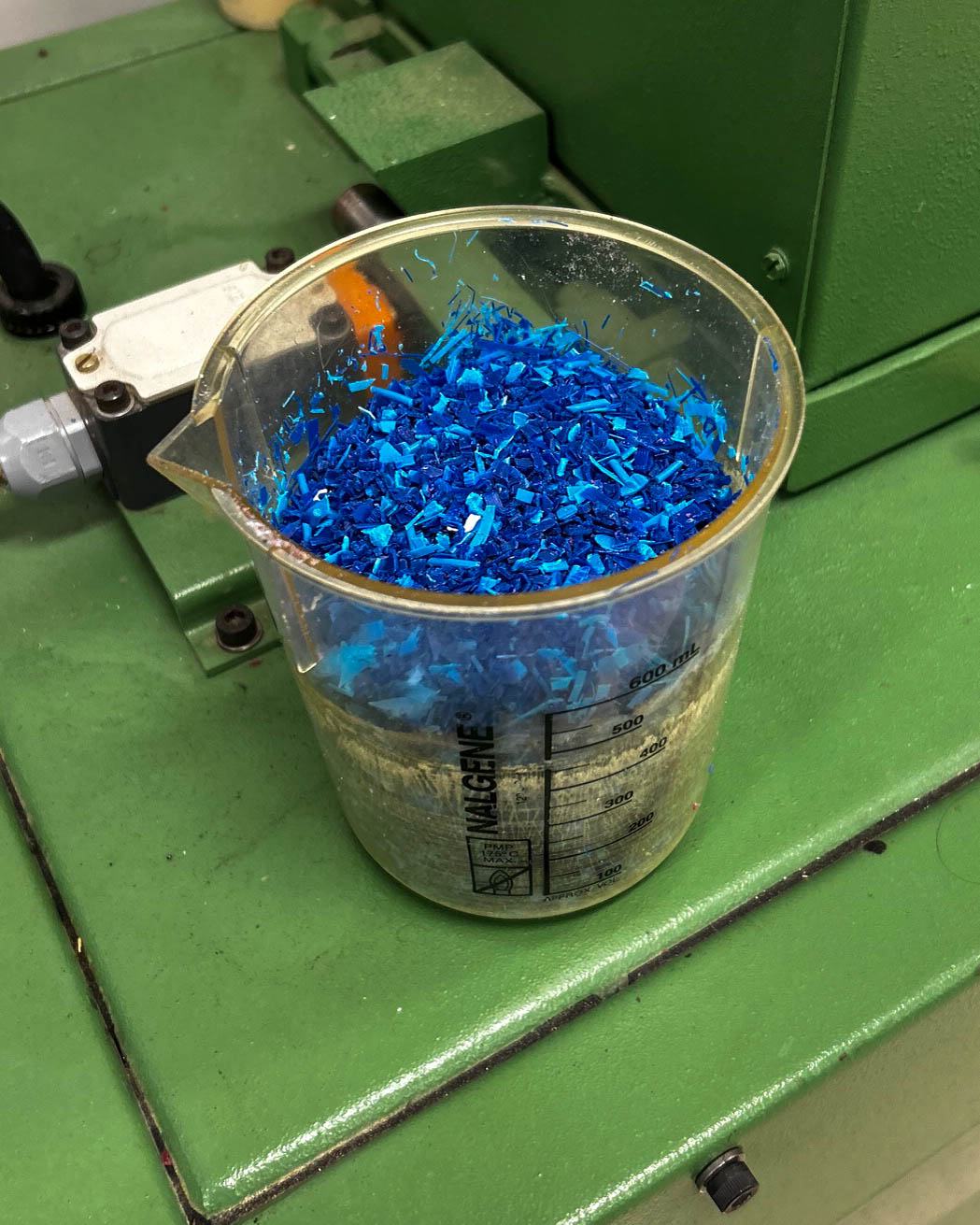
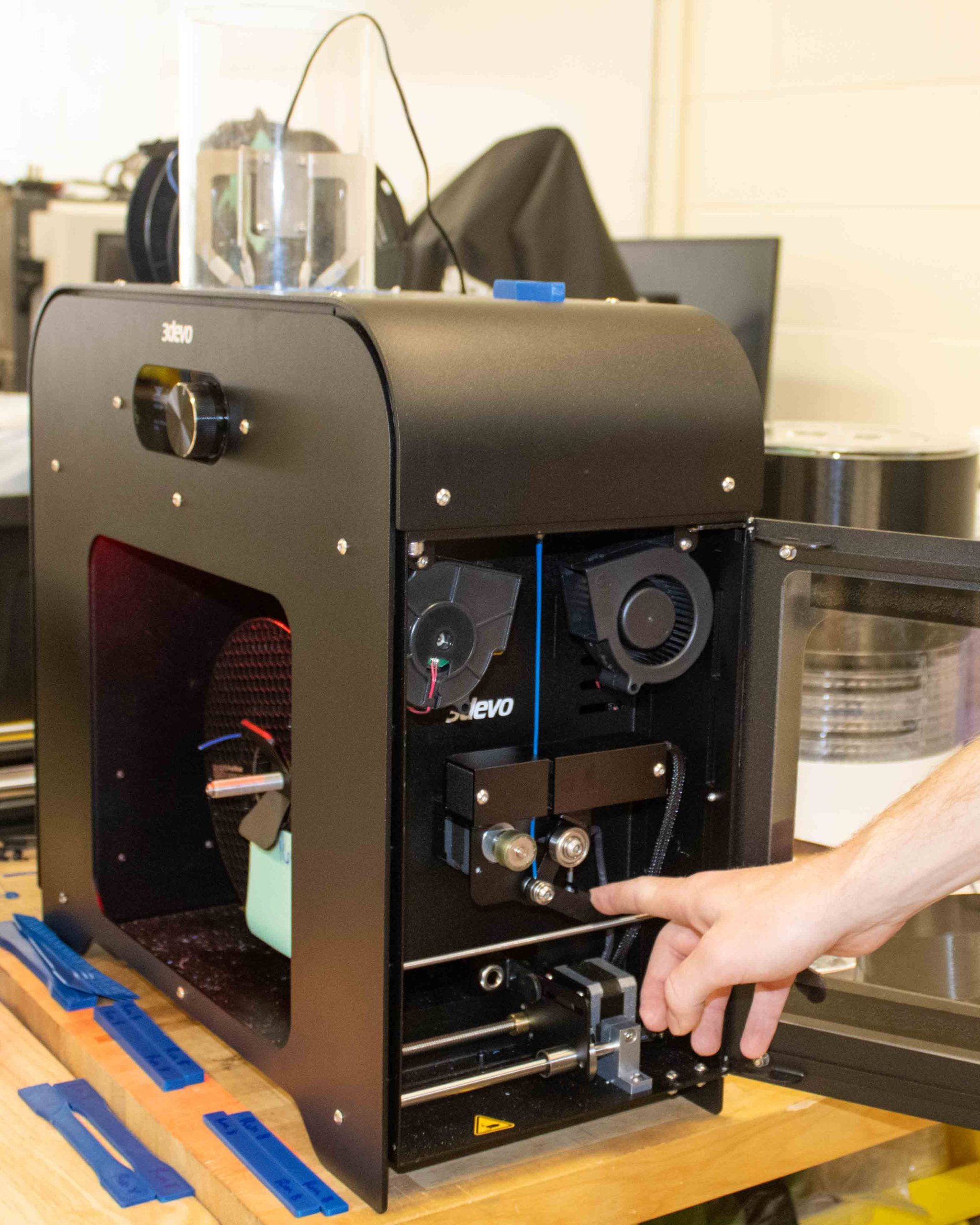
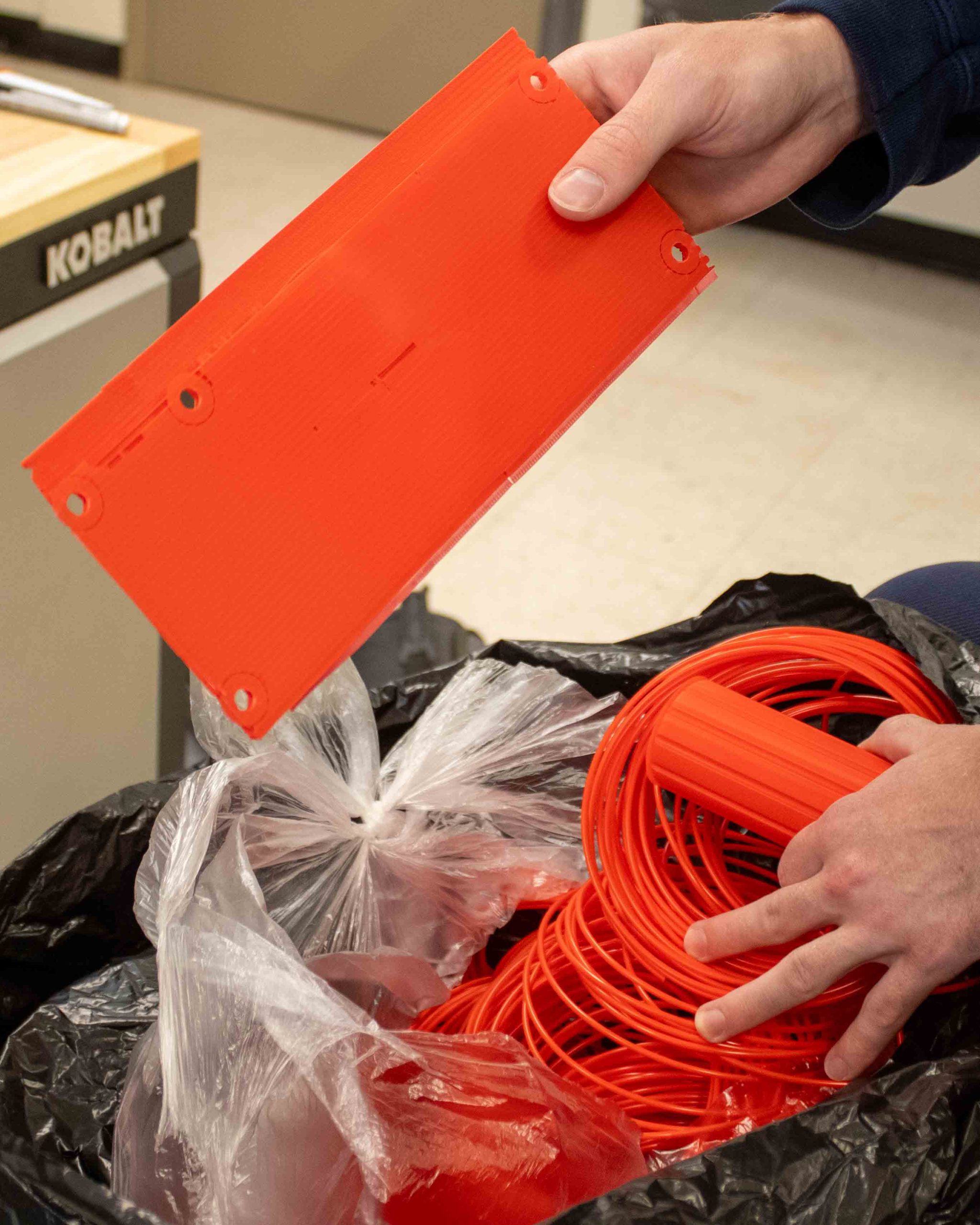
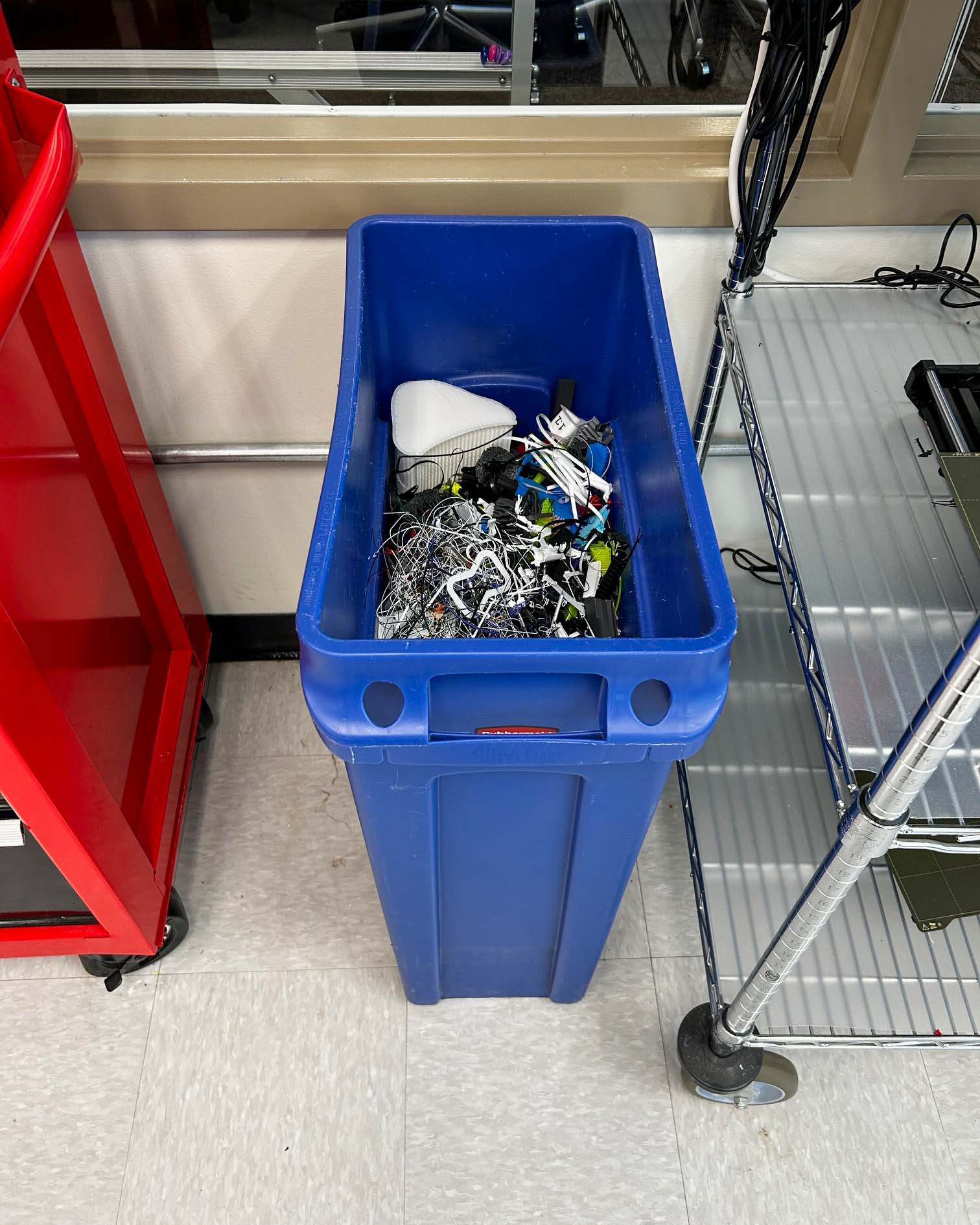
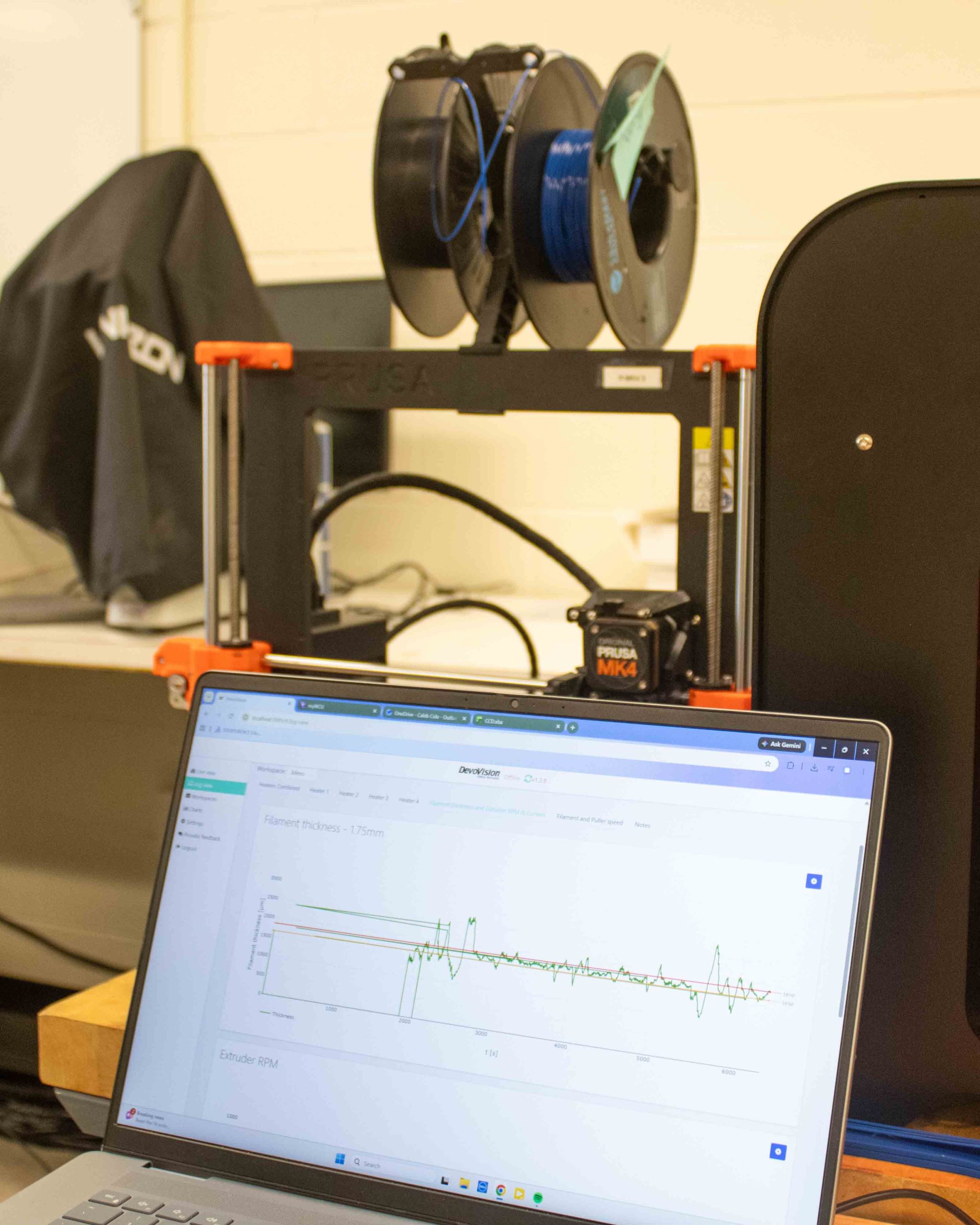
Working with waste generated in the makerspace, Caleb collects failed prints, support structures, and other plastic scraps. The material is sorted by color, shredded, screened for consistent particle size, dried, blended with virgin plastic pellets, and processed through a filament extrusion system to create new 3D printing filament.
The research team’s goal is to determine how much recycled material can be incorporated while still producing high-quality filament that is capable of producing durable printed parts. Efforts are also being made to optimize the recycling process so that it may be scaled up.
After comparing formulations of varying ratios of recycled PLA, Caleb found a material blend with significant amounts of recycled content which performed very well in all mechanical testing methods. This material blend managed to outperform both new and commercial control materials in several testing categories of mechanical strength.
“We were surprised by how much improvement we saw with recycled materials in certain tests,” Caleb said. “Plastics typically degrade each time they’re recycled, so seeing those results was really exciting.”
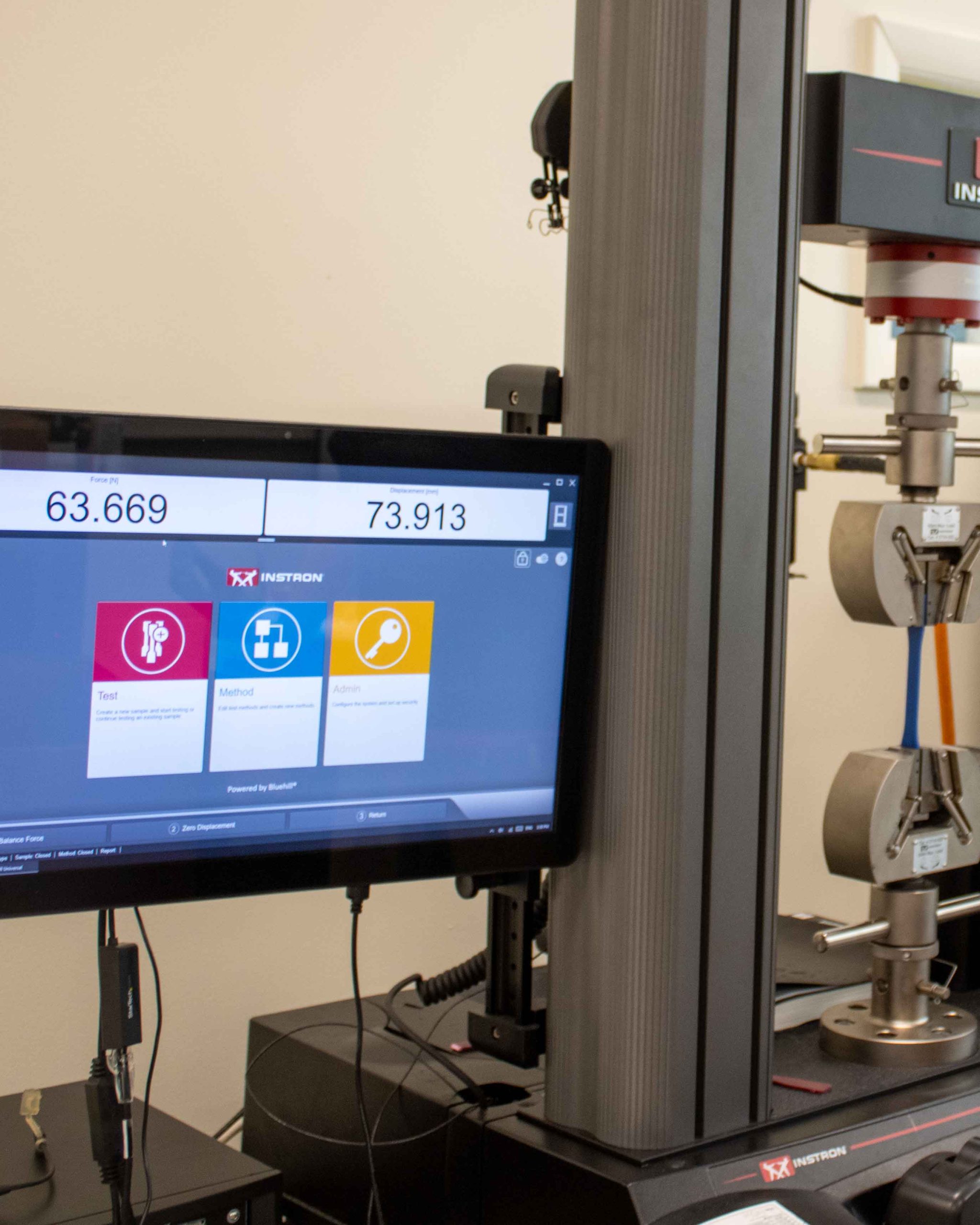
To evaluate performance, Caleb conducted a slew of mechanical destructive and non-destructive tests to compare the strength and durability of different material blends. Current work focuses on optimizing manufacturing parameters to improve filament quality and consistency.
The long-term vision is to create a continuous recycling cycle collecting waste, converting it into new filament, and returning it for future projects.
Beyond reducing waste, Caleb believes the research could have broader implications for manufacturers, educational institutions, and makers looking to improve sustainability.
“If this process scales successfully, it could help other makerspaces, individual users, educational institutions, and manufacturing companies recycle more effectively,” Caleb said. “It has the potential to contribute to better plastics recycling across many applications and industries.”
Through innovative research and hands-on problem solving, Caleb’s work demonstrates how engineering technology can help address real-world sustainability challenges while advancing the future of additive manufacturing.
RELATED LINKS
Research at Western Carolina University