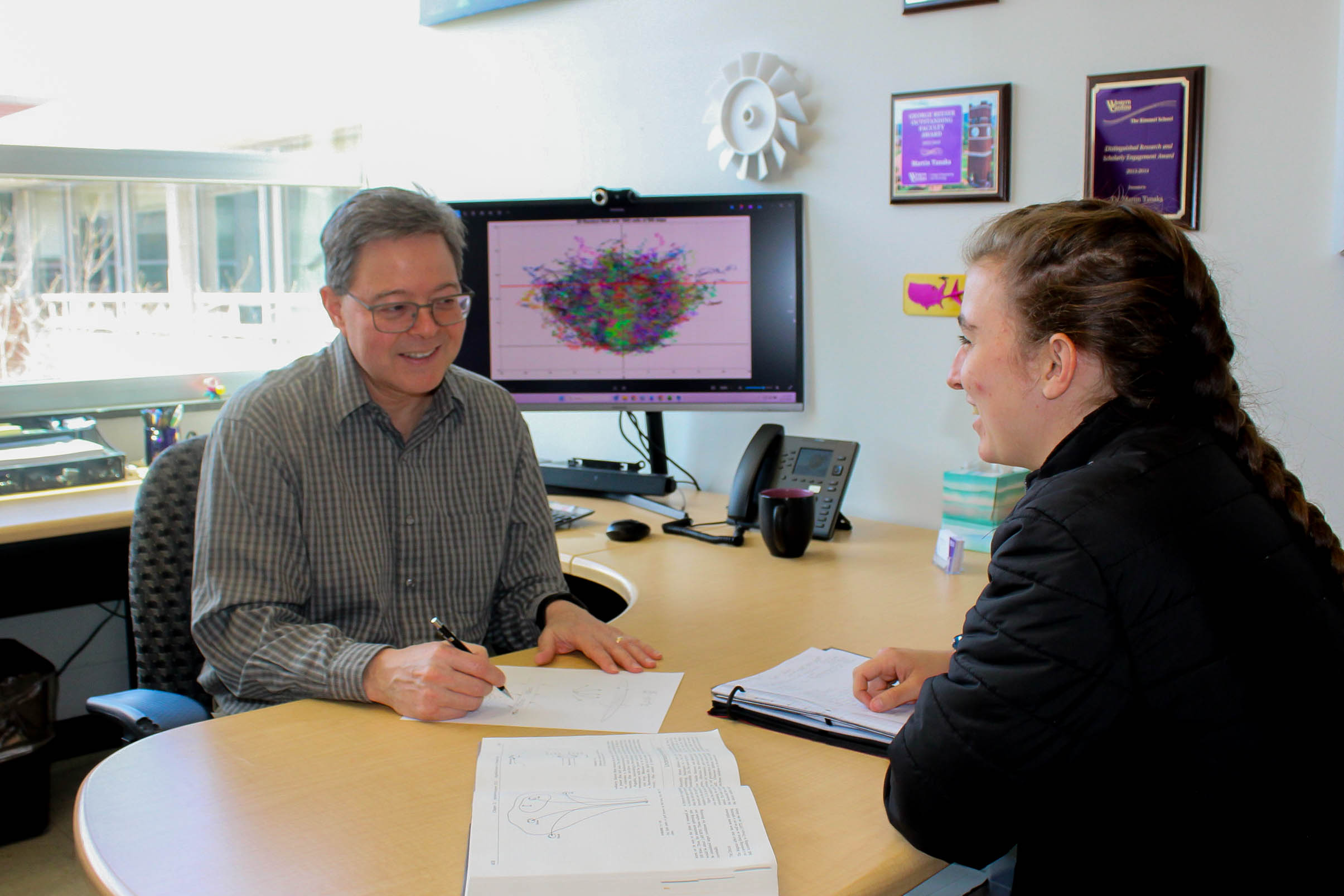
Dr. Martin Tanaka, a professor in the WCU College of Engineering and Technology and director of the mechanical engineering program, received $1 million of funding from NCInnovation to develop an innovative device to treat lymphedema. Learn more about what led him to engineering, to WCU, and to biomedical engineering research in this Q&A.
CET News: What led you to engineering? Looking back, is there something you particularly enjoyed playing or being part of in childhood that led you to engineering?
Dr. Tanaka: As a child, I was always creative, loved art class, and liked building things from my imagination. As I grew older, I enjoyed taking things apart to see how all the pieces worked together. I didn’t always get them back together, but I learned a lot from doing it. I ended up taking an electronics class in high school which required us to research potential occupations. In those days we used a big careers book, and I looked up electrical engineering. It seemed fun, however, when I flipped to the next page, I saw mechanical engineering. After reading about it, I knew that this is what I wanted to do. I think all that childhood play allowed me to realize what a great fit it was. That was in tenth grade, and I am so thankful that I flipped that page.
CET News: What initially sparked your interest or led to you to be involved in biomedical engineering research?
Dr. Tanaka: Biomedical engineering came later for me. After working in industry for a while, I decided to go back to school for my PhD. I am fascinated by the human body’s amazing abilities and extreme complexity. I realized that biomedical engineering was an opportunity to apply my engineering mindset in way that could help humans on a very personal level. As a biomedical engineering professor, I get to research and invent new medical devices while simultaneously guiding the next generation of researchers who will have a real impact on people’s lives.
CET News: How do WCU students benefit from working with you on research?
Dr. Tanaka: Student research is a great mechanism for building problem-solving and collaborative skills while at the same time fostering an individual student’s interests, confidence, and independence. In my lab, I am not going to solve the problems for them, but I will provide all the support and mentorship I can to help them succeed. I am also flexible on what the research project looks like. I have opportunities for students to be part of the research I am doing for my grants which gives students a taste of grants-based research. I also have supported student-driven research that is not part of ongoing grant work, so I am open to the student’s vision. Research in my lab is also a fantastic opportunity to see if graduate school might be a good next step or if work in the biomedical field may be of interest to them.
CET News: What do you wish more WCU engineering students realized or knew about doing research?
Dr. Tanaka: First, I would like to say that the word “research” can be intimidating, but it doesn’t need to be. Research is just trying out different ways to solve a problem and figuring out which ways work and which ways will not. We don’t always know the answer to a problem, but we can come up with ways to find one. This is an important skill to develop, but they don’t have to do it alone. We provide the opportunity to investigate a challenging topic guided by an experienced researcher. The student will receive individual guidance on a weekly basis. We have a lot of faculty research areas, so they just need to find someone who shares their interests and reach out to them. We can help them with identifying a research topic. Initially, projects can be small. Over time, students can pursue bigger and more complex projects as their research skills and courses advance. Their research mentor can also assist them with finding a place to present the research, guide them in writing an abstract and help them find funding for travel. All these things add up to one great experience they will always remember.
CET News: What do you find so important or intriguing about developing medical devices?
Dr. Tanaka: Medical devices are important because they have the potential to improve a person’s quality of life. In many cases, this improvement can be life changing for the individual. The challenge is that they often require an interdisciplinary team with varied skills and experience to become fully developed. In most cases, no one person has enough ability to develop a solution or even fully understand the problem without input from others. Innovative new products require input from clinicians, engineers, patients, legal and business professionals to name a few. At the same time, we must ensure that the device does no harm since it will be interacting with a human on some level.
CET News: What is a research question that has kept you up at night?
Dr. Tanaka: It’s funny that you ask me this question and the quick answer is all of them. I often come up with solutions to problems while sleeping, and I cannot fall back to sleep until I write it down. It isn’t always research either. It may be a particularly difficult technical problem that I worked on that day, a new research idea for a student, or a clever exam question. Some of my best ideas have been middle of the night inspirations. I must admit that modeling of diffusion in the human body has claimed quite a few of my nights though.
CET News: Tell us about some of your external or summer projects/work.
Dr. Tanaka: I spent three of the last four summers in the Washington DC area working with scientists and engineers at the U.S. Food and Drug Administration as part of a grant supported by the National Science Foundation. The FDA regulates the health and safety of food, drugs, and medical devices. Our work focused on developing new computational models to predict the quantity of potentially hazardous materials that could leach from implanted medical devices such as artificial joints.
CET News: Who is one person who really supported or helped you along the way?
Dr. Tanaka: I’ve had a lot of support throughout my career. Some were professors that I had as an undergraduate or graduate student, some were work colleagues in industry, and others were mentors after starting my academic career. However, the one most impactful person who has consistently helped to guide my success is my wife.
CET News: What is next for you?
Dr. Tanaka: There is a lot of work to do with the NCInnovation grant. It is an exciting new phase for my research, and I am looking forward to it. There will be challenges, but I am fortunate to be supported by excellent colleagues and mentors.