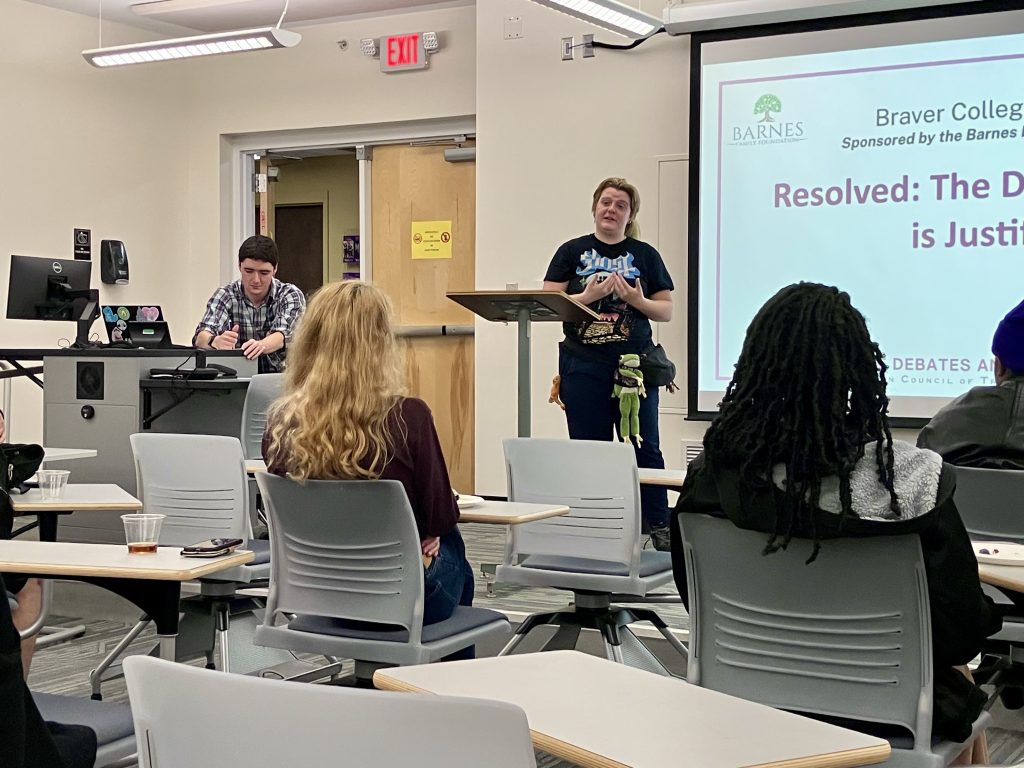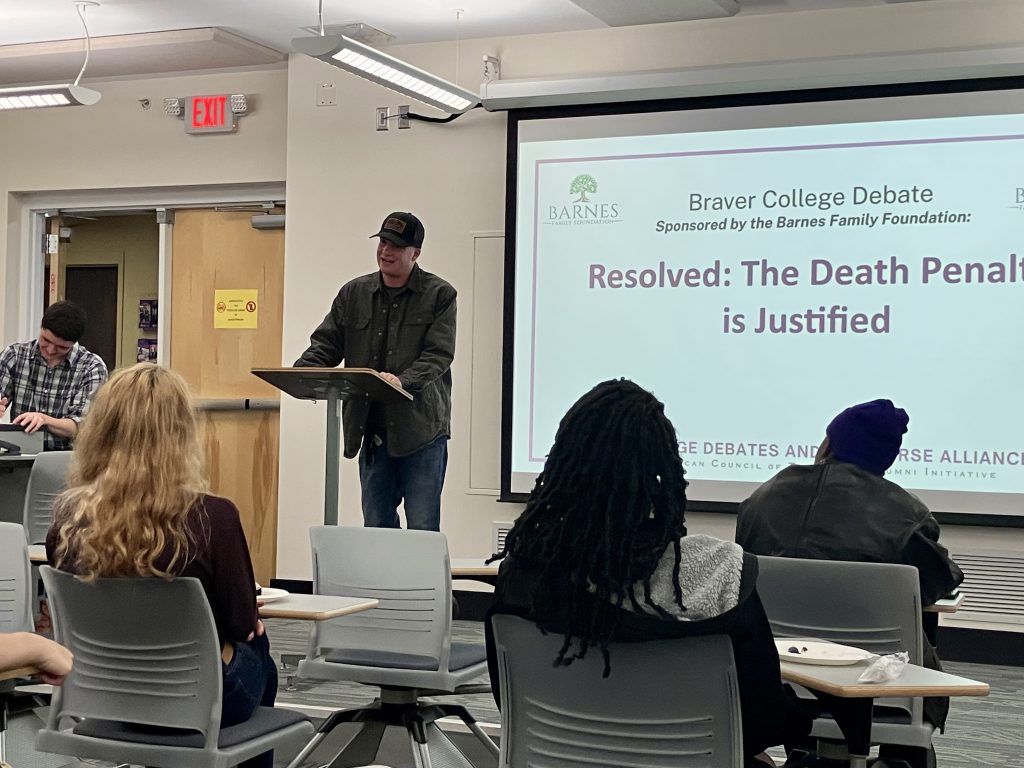
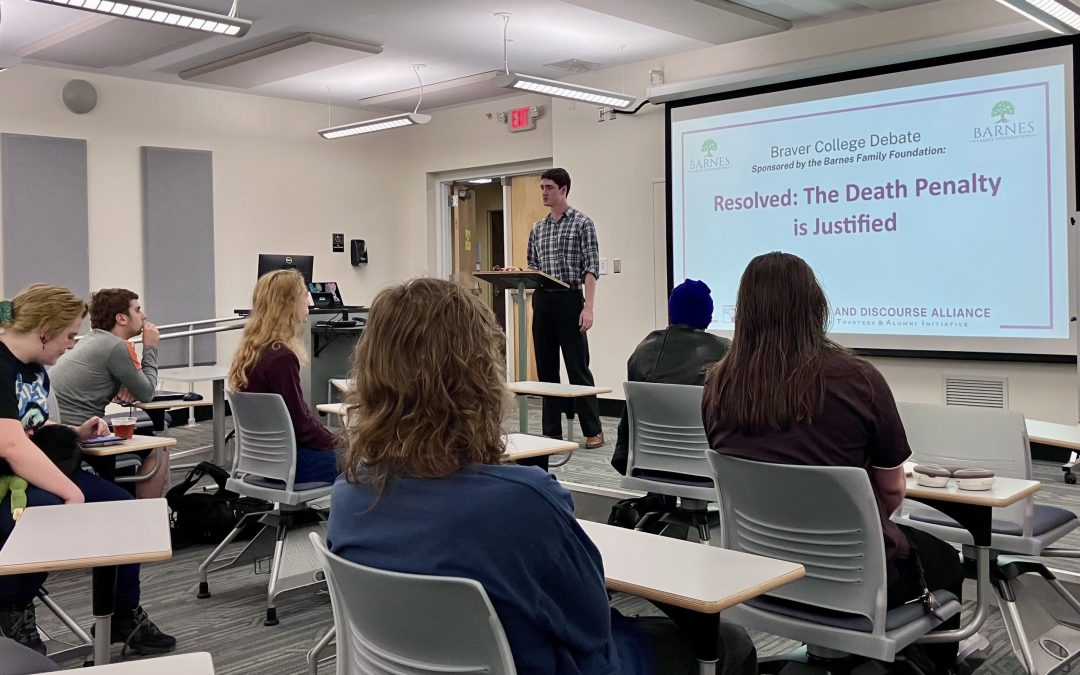
On October 29th, over 30 students and faculty gathered to debate whether the Death Penalty is Justified. Students offered many views both for and against the resolution.
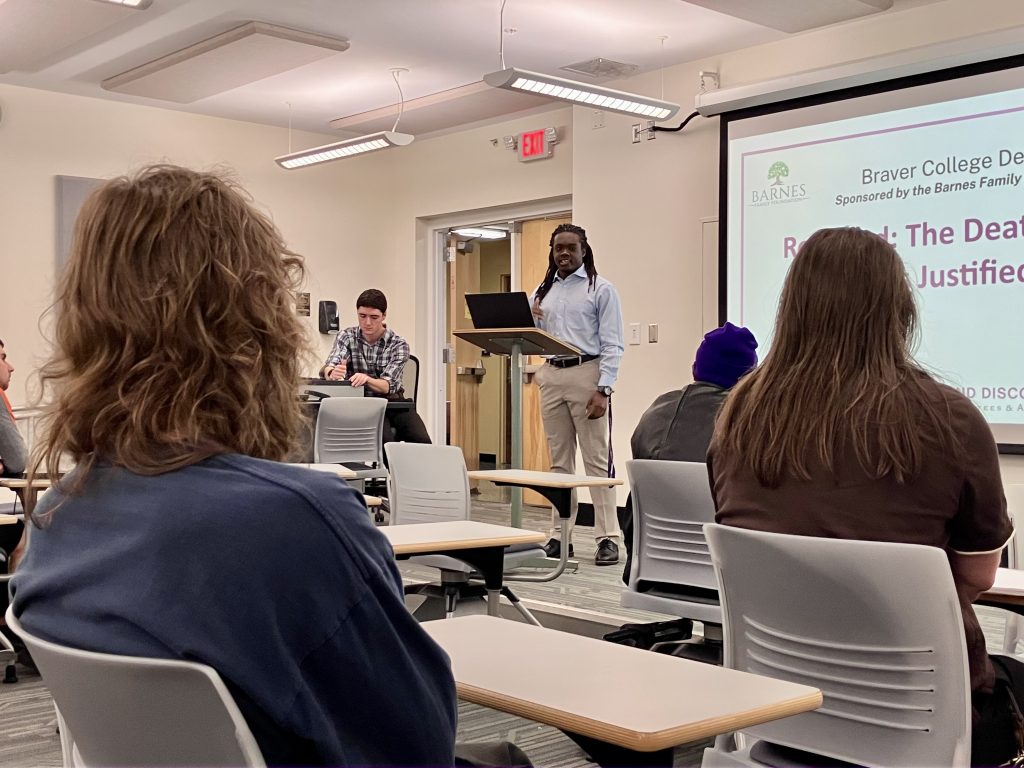
The debate began with two key reasons for the affirmative. First, the death penalty ensures that those who have committed heinous crimes will not be repeat offenders. Using the death penalty protects citizens from future harm. Second, speakers noted that the death penalty serves as a deterrent, thus reducing the probability that such heinous crimes will take place. Those in the negative noted that the finality of the death penalty means that any mistakes or errors by a jury or judge can’t be reversed. Because criminal proceedings can result in a guilty verdict even when the defendant is innocent, the death penalty is cruel. Moreover, those in the negative noted that some recent research suggests no deterrent effect. Most heinous crimes are either crimes of passion or those committed by people found to be mentally unsound.
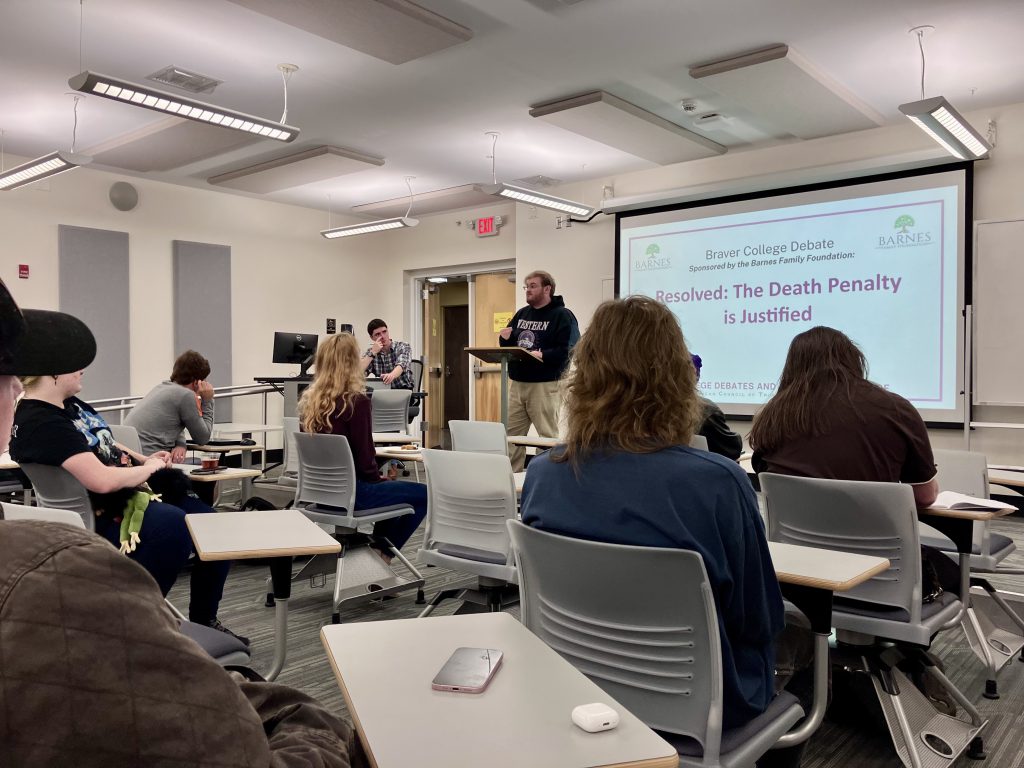
As the debate continued, students also discussed Locke and Mill’s views on liberty and why the death penalty violates individual liberty. Others noted that other types of punishment, such as the removal of a limb, might serve as a greater deterrent than the death penalty.
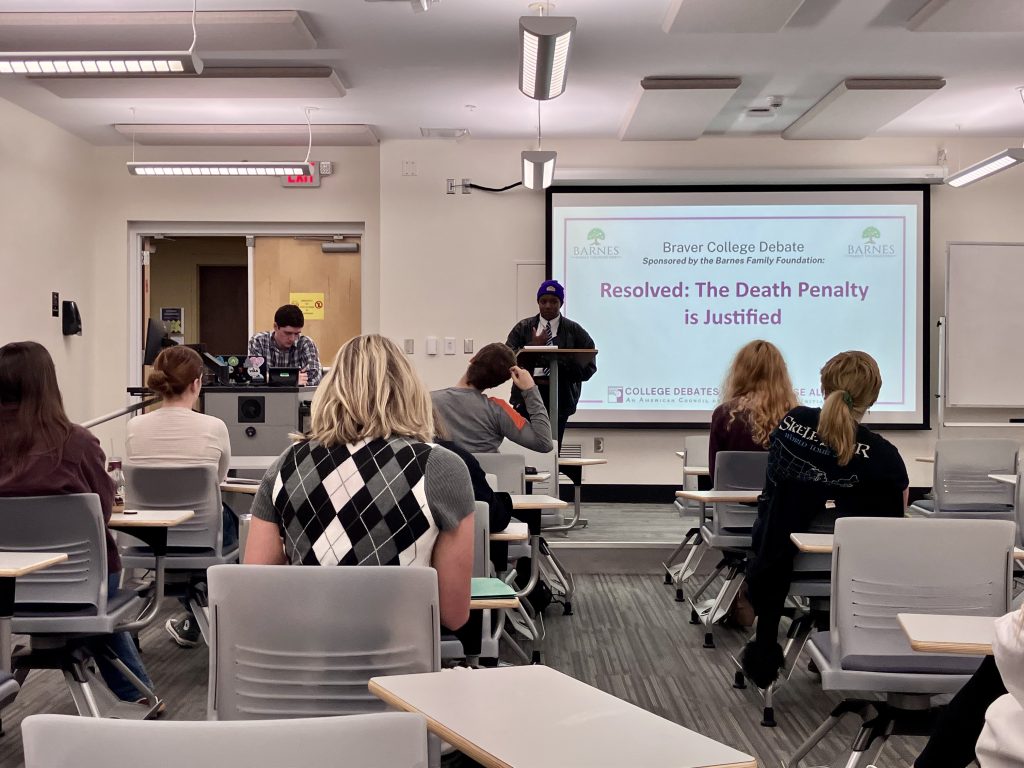
The CSFE is thankful for Barnes Debate Fellow, Laz White, who expertly introduced the resolution and rules of the debate. He seamlessly guided the discussion and ensured that all speakers and audience members were given an opportunity to offer their views. He also ensured that all audience members were given an opportunity to ask probing questions of each speaker.
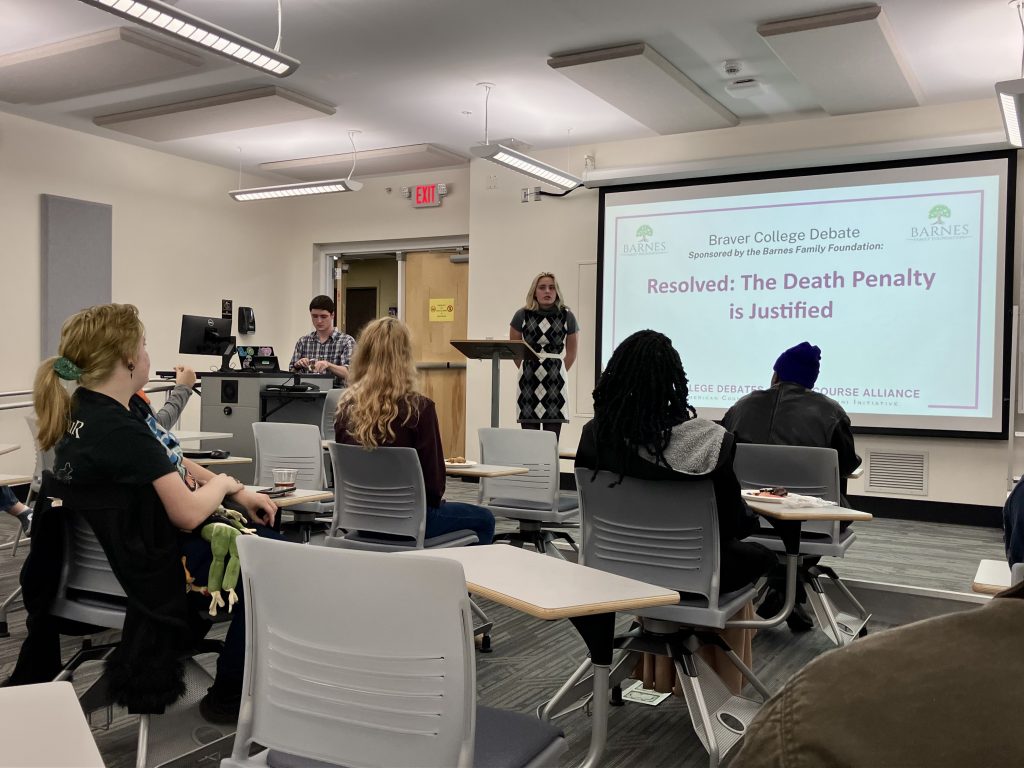
The Debate was made possible through the support of the Barnes Family Foundation, ACTA, and the College Debates and Discourse Alliance. We thank Astrid Richardson and Bryan Paul for their suggestions and guidance.
And a big thank you to Whitey Mcall for ensuring we were all well-nourished and hydrated!