COVID-19 Prevalence and Empty College Seats
A year ago, many prospective 2020 high school graduates were finalizing their decisions on whether and where to attend college. The 2019-2020 application and acceptance process was much the same as it had been over the last twenty years. Most selective schools still required standardized tests. Many students had applied to their reach schools and safety schools. These soon-to-be high school graduates were scheduling admitted student day visits. But a new, novel little virus was about to derail their plans.
Many early articles The Chronicle of Higher Education and Inside Higher Ed began discussed how the COVID-19 pandemic was altering college enrollment (The Chronicle of Higher Education 2020; Hoover 2020; Jaschik 2020a). As the number of cases and deaths increased and institutions became increasingly concerned about how it might impact students’ choices and decisions, many colleges moved the traditional May 1st decision day later into June, July, and even August (Jaschik, S. 2020d; Redden, E. 2020b). Yet little concrete evidence was available.
One of the preliminary sources on college enrollment came from the National Association for College Admission Counseling’s (NACAC) online bulletin board (National Association for College Admission Counseling 2019, 2020). Each year the NACAC asks postsecondary member institutions about their availability of space, institutional financial aid, and housing as of May 1st. Completing the online bulletin board form allows colleges to publicly announce that they have space available for fall undergraduate enrollment. Each year, the NACAC posts this information online a few days after May 1st. Schools can, and often do, submit updates to the NACAC bulletin board on the availability of seats, financial aid, and housing until the entire bulletin board is removed at the end of July. Because this study focuses on first-year students, I only include four-year schools that report having openings, available student housing, and financial aid for first-year students.
Combining this preliminary enrollment information by institutions with the number of deaths and cases in the institution’s home county, I find that a one standard deviation increase in deaths is associated with a 65 percent increase in the probability a school reports open seats for first-year students, housing, and aid. For a one standard deviation increase in cases, the probability is just over 50 percent. A one standard deviation increase in the growth rate of COVID-19 deaths is associated with a 45 percent increase in the likelihood that a school reports openings. A one standard deviation increase in the growth rate of COVID-19 cases increases the probability of reporting openings by 56 percent.
Overall, these results suggest that students were a) alarmed by the potential health risks of attending a college in or near a COVID-19 hot spot; b) worried that colleges in or near a COVID-19 hot spot might not offer students the full, face-to-face intimate college experience; and c) concerned that schools may demand students to leave campus again, much like the spring of 2020.
The first 50 downloads are free here, the paper can be found here and the online appendix can be found here.
Citation: Sean Eric Mulholland (2021) Covid-19 prevalence and empty college seats, Applied Economics, DOI: 10.1080/00036846.2020.1841884
References:
The Chronicle of Higher Education. 2020. “The Coronavirus Enrollment Crash.” May 7th 2020. Viewed May 23rd 2020. https://www.chronicle.com/article/The-Coronavirus- Enrollment/248724
Hoover, E. 2020. “How Is Covid-19 Changing Prospective Students’ Plans? Here’s an Early Look.” The Chronicle of Higher Education. Accessed March 25th 2020. Viewed May 23rd 2020. https://www.chronicle.com/article/How-Is-Covid -19-Changing/248316
Jaschik, S., 2020a. “The Online Risk.” Insidehighered.com. Accessed 19 May 2020. Viewed May 23 2020. https:// www.insidehighered.com/admissions/article/2020/05/19/one-third-high-school-seniors-say-they-will-defer-or-cancel-rather
Jaschik, S. 2020b. “Colleges Could Lose 20% of Students.” insidehighered.com. Accessed April 29th 2020. Viewed May 8th 2020. https://www.insidehighered.com/admissions/article/2020/04/29/colleges-could-lose-20-percent-students-analysis-says
National Association for College Admission Counseling. 2019. National Association for College Admission Counseling’s annual College Openings Update (formerly the Space Availability Survey). https://www.nacacnet.org/news–publications/Research/CollegeOpenings/ (Viewed May 3, 8, 10, 12, 16, 17, 18, 20, 21, and 22, 2019)
National Association for College Admission Counseling 2020a. National Association for College Admission Counseling’s annual College Openings Update (formerly the Space Availability Survey). https://www.nacacnet.org/news–publications/Research/CollegeOpenings/ (Viewed May 5, 8, 10, 12, 15, 2020)
National Association for College Admission Counseling 2020b. NACAC’s College Admission Status (Update). https://www.nacacnet.org/news–publications/newsroom/college-admission-status-coronavirus/ Viewed April 22nd, 2020.
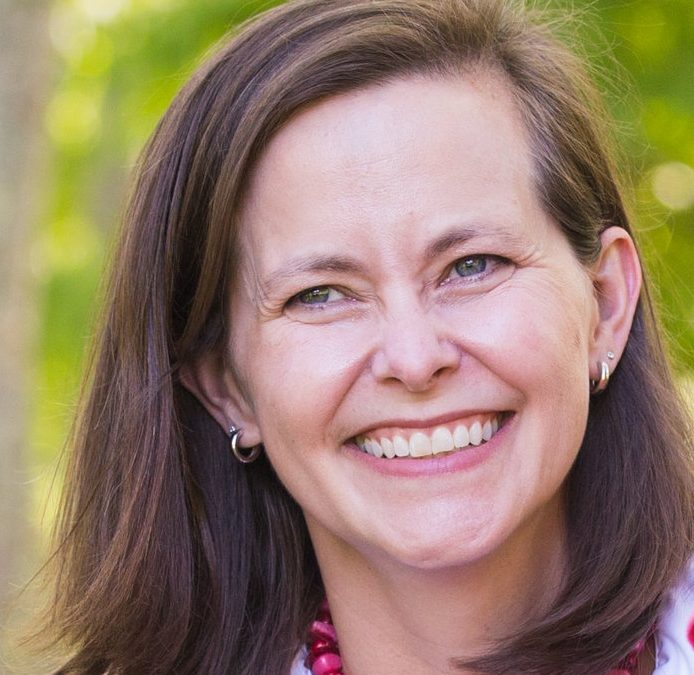
Meet Angela Dills
To continue with our highlights of our 2020-21 Faculty Affiliates, today we are putting Dr. Angela Dills in the spotlight. Angela is the Gimelstob-Landry Distinguished Professor of Regional Economic Development and Professor of Economics at WCU.
Angela received a B.A. from the University of Virginia and an M.A. and Ph.D. in Economics from Boston University. Before joining WCU as a professor, she held faculty positions at Clemson University, Mercer University, Wellesley College and Providence College. Currently, Angela’s research focuses on policy questions in both education and health.
For her research with CSFE, Angela is focusing on telemedicine and the recently passed parity laws that allow people a different way to access healthcare. Mainly, this research zeroes in on the concern that the quality of care is not as good via telemedicine.
Telemedicine includes not only video conferencing with your provider but also interactions such as sending photos of concerning issues to your provider, your provider sending medical images to a specialist or the use of asynchronous electronic transfer technology used to provide constant monitoring to patients with heart conditions or diabetes.
Since the beginning of the COVID-19 pandemic, telemedicine has been utilized far more to prevent furthering the spread of the virus. Thus, many states and the federal government have adopted pandemic-specific rules that allow more patients to use their insurance to cover telemedicine access to their providers.
“But not only are more people using telemedicine because of the pandemic but a lot of states and Medicare and Medicaid programs have relaxed their rules on telemedicine and made it a lot easier for people to use telemedicine and have their insurance cover the telemedicine and we’ve seen telemedicine explode,” said Angela.
With no real end date to the pandemic set in stone, the question becomes if these relaxed laws will stay in place. Through Angela’s research, she has found that there really is no lapse in the quality of care that patients receive, providers can cut down costs using these methods and people have more access to healthcare and specialists. These results argue for keeping the pandemic-rules in place, even after the pandemic.
“Telemedicine holds a lot of promise for Western North Carolina and in general areas in the US that look like Western North Carolina. We are medically underserved, particularly in the very western counties and telemedicine provides opportunities for people who might have to drive two hours each way to get to Asheville to see a specialist or to get to another larger metropolitan area to see a specialist. Telemedicine provides opportunities for patients to more easily and more affordably access care, making rural areas more livable.” said Angela.
We are very proud to have Angela in our 2020-21 Faculty Affiliate cohort and for her hard work and research. Her issue brief on telemedicine will be available in March. On the horizon, Angela is working with Audrey Redford and another co-author on a paper about death by distribution laws.
Thanks to Angela for making her work a part of CSFE.
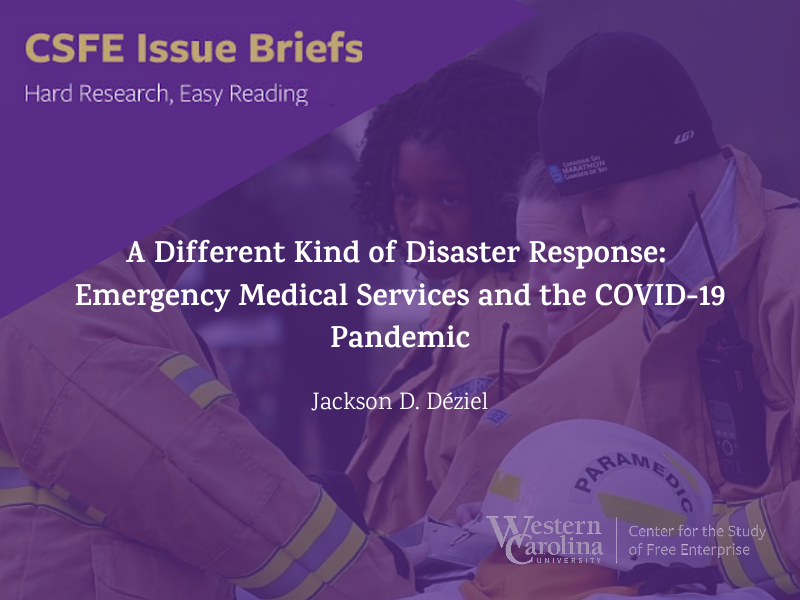
CSFE’s new study on Paramedics and the Pandemic
EMT’s and paramedics have taken on profoundly new and different roles since the pandemic. Unlike singular and localized events, COVID-19 presented new challenges to Emergency Medical Services professionals. In response, these EMS professionals have upgraded their preparation, and new pressures are mounting to evolve professional training and public policy as well. These insights and more are part of our newest study by Faculty Affiliate Jackson Déziel, “A Different Kind of Disaster Response: Emergency Medical Services and the COVID-19 Pandemic.” Professor Déziel is Director of WCU’s Emergency Medical Care program, and his research background is in the field of public policy. We can’t think of a better source for understanding the intersection of emergency services and public policy. His work provides workable ideas for bolstering the EMS workforce, expanding occupational roles, and promoting innovation by emergency professionals throughout the industry. Read the full study at the link above, and feel free to visit another entry on this blog, Meet Jackson Déziel.
CSFE’s new study on North Carolina’s prospects for COVID-19 economic recovery
We’re happy to release our new study on North Carolina’s prospects for Covid-19 economic recovery. A story in Monday’s Wall Street Journal outlines some of the ways in which Covid-19 economic recovery will be a long-term process. Globally, economic growth is forecast to be strong in 2021, but results will vary wildly by region and sector. Certain markets are not expecting their travel and hotel business to recover until mid-2022, and international air travel is expected to lag beyond 2023.
Here in North Carolina, the labor market has only partially bounced back from the shock of the virus, with over a hundred thousand jobs still to make up. State leaders have voiced their renewed commitment to economic growth and prosperity for all Carolinians. According to our newest CSFE Issue Brief, North Carolina’s prospects for sustained Covid-19 economic recovery depend on having a strong combination of top-down and bottom-up forces at work. Policymakers play a central role in maintaining both. Our analysis shows that the state entered the pandemic relatively well-prepared, with a budget in good fiscal condition, and a healthy climate of economic freedom. We conclude with policy implications across three broad recommendations for maintaining strong top-down and bottom-up forces.
The full study can be viewed or downloaded at our Issue Briefs page, “North Carolina’s Prospects for Covid-19 Economic Recovery: Top-Down and Bottom-Up Assessments.”
Below is the WCU news release.
WCU center examines state’s prospects for economic recovery after pandemic
CULLOWHEE – The Center for the Study of Free Enterprise at Western Carolina University has issued an assessment of economic recovery, sustainability and growth in North Carolina following the pandemic.
According to the U.S. Department of Labor, the state recorded 11,508 unemployment claims for the week that ended Jan. 23, down from a revised 14,177 the previous week. While that is a better status than national unemployment trends, it still reflects an economic slowdown in response to the coronavirus pandemic.
Authored by Edward Lopez, economics professor at WCU and center director, and Emma Blair Fedison, a policy researcher at the center and a graduate student at George Mason University, the study found the state’s prospects for making a sustained economic recovery are sunny, with some qualifications.
“The decisions of today’s policymakers will affect the climate of Covid-19 economic recovery well into the future,” the authors write. “North Carolina’s prospects for sustained recovery are good, underscoring the need to maintain good fiscal health and continue improving economic health in the state.”
The study focused on two main components, the state’s fiscal health and the state’s economic health, as well as the public-private emphasis on a well-trained workforce, modern infrastructure with a strong, competitive tax structure that attracts jobs and investment.
“I’m so appreciative of the timely work that Dr. Lopez and Ms. Fedison have done,” said AJ Grube, dean of WCU’s College of Business. “Their efforts have produced valuable, impactful information for local and state policymakers, which will realize positive effects for the state of North Carolina.”
The researchers said that when it comes to North Carolina’s goals for growth and prosperity, economic freedom indexes are the most important among all barometers of economic prospects for growth, drawing from both the state level data and, using the most recent studies, the municipal level.
“To promote our state’s leaders’ goals of growth and prosperity, our analysis supports three broad policy conclusions,” Lopez said. “Maintain fiscal discipline, a healthy level of economic freedom, and a good balance of economic freedom in the state.”
Founded in 2015, the Center for the Study of Free Enterprise conducts economics research, public forums and thought leadership on issues pertaining to economic development in Western North Carolina and statewide, through students, faculty and staff involvement. The research was funded by the center’s Covid-19 Research Initiative, which received a grant from the North Carolina Policy Collaboratory. For more information, visit wcu.edu/csfe or email csfe@wcu.edu.
Geoff Cantrell, cgcantrell@wcu.edu, 828-227-3079
Meet Dr. Inhyuck “Steve” Ha
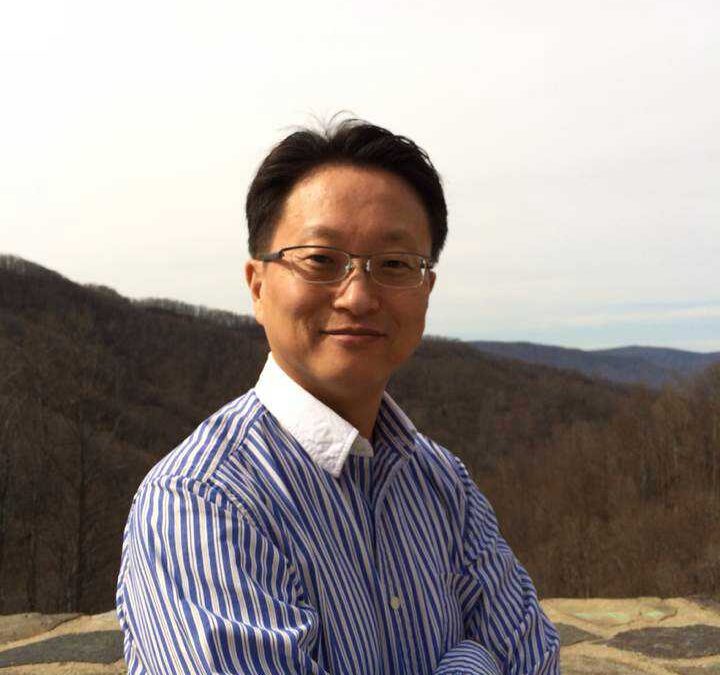
Happy New Year from all of us at the CSFE community, we hope you had a happy and safe holiday season. Earlier in 2020, we began our spotlight series on our 2020-21 Faculty Affiliates, and today we would like to highlight Dr. Inhyuck “Steve” Ha. Steve is a Professor of Economics at WCU and has been the director of the MBA program in the College of Business, with research interests in the effects of COVID-19 policy on the economy and the effects of affirmative action programs at the state and national level.
Currently, one of his research areas is focused on the effects of the COVID-19 pandemic policies in the WCU community. Working with CSFE Director, Edward Lopez, and CSFE Associate Director, Sean Mulholland, Steve is specifically developing a statistical model to estimate the economic and fiscal impact of the change in instructional modules at WCU caused by COVID-19 on the community. With a survey already sent out to WCU students, the goal was to find how many stayed home or off-campus, what changes were happening with their spending habits, etc., and then they put that data into a model to show how our local economy was affected.
“We were able to do some in-depth research in that area. So hopefully, we can continue to work on this and extend our research to reach more local businesses and people out there. If we have more resources, then that is more research,” said Steve.
Steve went on to explain how the post-COVID era of society will be different, but just how different is what we are yet to learn, “So I think our approach is to figure out what’s been done. We have a lot of data at the national level, state level, about positive cases and deaths. However, I think it should be done locally, as well. So that’s why we were interested in this research,” said Steve.
When Steve began this line of research, he went to WCU administration curious if there had been any other research done into if students want to take classes online or any other research that might mimic his own, but there wasn’t. The hopeful outcome of his research is to not only answer this question but also how each of WCU’s decisions with their COVID-19 policies has affected students, our local economy, and other rural areas. Steve doesn’t believe this research is a crystal ball into the future, “But if we figure out what has happened and the businesses perspective, then, hopefully, we have a better understanding about some kind of structural change in our economy,” Steve explained.
“These will not necessarily be a policy decision [the outcomes of his research] at the university level, the state level, or the universal level. Still, we should be data-driven,” Steve said, continuing, “That is one of the contributions we could possibly make.”
Steve completed his master’s at the University of Wisconsin-Madison and then went to the University of Minnesota-Twin Cities for a Ph.D. in Applied Economics. He has worked not only in the academic sphere but also has had the opportunity for practical research, working with local businesses, practitioners, and state government officials in a variety of ways. “Then, I found this opportunity at WCU, it has given me opportunities to do some more kinds of practical research, estimating economic impact to the local community, regional economy and state economy,” said Steve.
We are so excited to continue to work alongside Steve with his research, and we look forward to following along with all his upcoming research. In the future, Steve would like to continue this current path of research while also expanding his scope in COVID-19 related policies.
Thank you, Dr. Inhyuck “Steve” Ha for being a part of the CSFE community.

Free Enterprise and the Importance of Social Cooperation
This week, I had a short essay published under the title, “I, Vaccine: How to Appreciate the Beautifully Simple“. In the short piece, I recognize that vaccines are public goods in production and consumption, but mostly I draw attention to the role of globalized markets in vaccine distribution. We can all hope that the vaccines continue to bring success to the battle against the virus. Here at CSFE, we also see the principles of free enterprise at work behind the scenes, helping that story to be the success we all want. In the short essay, I reference a Wall Street Journal article describing the first shipments of Pfizer’s vaccine.
The distribution has been widely described as the biggest mobilization since World War II. Bravo!, I say. We need some awe-inspiring words to befit this marvelous spectacle.
And yet, the vaccine itself is a relatively simple compound. It consists of Pfizer’s modified mRNA plus seven inactive ingredients as common as table sugar. The mRNA itself stands as an unprecedented achievement. Yet the compound is ordinary, even elegantly so. And it will save millions. What beauty in the simple!
For many, this facet of the story evokes the classic essay with the curious title, “I, Pencil: My Family Tree as Told to Leonard Reed”. Originally published in 1958, this essay skillfully describes the materials that comprise an ordinary pencil, and the far reaches of the world whence those materials source. It also artfully describes the innumerable people around the world whose daily work contributes crucially to putting ordinary items such as pencils on nearby stores’ shelves.
That’s exactly how the WSJ describes the Pfizer mobilization. The vaccine must arrive at the right time in the right condition at thousands of locations around the country. And the efforts of myriad numbers of people from faraway places contribute to the mobilization. When you start to think about it, the amount of human coordination being achieved is astounding. It makes my son and me want to ask: Who designed such a marvelous plan? Who deserves credit for taking charge of this? The surprising answer that comes to us from the pencil is: no one!
This is a time-tested idea in economics, that global trade at market prices carries salutary side benefits, one of which is a ready-made system for distributing the vaccine. CSFE is a university center, and I always stress that our content must be well-grounded in research, specifically research that is scrutinized by other scholars in the respective academic disciplines. Free enterprise principles are not about being pro-business or anti-government, and they’re certainly not about partisan politics or culture wars. There is a centuries-old lineage of well-respected thinkers helping to understand the connections and limitations between economic freedom and social betterment. My one-time mentor and co-author, Peter Boettke, is among those thinkers. In his essay from January 2020, “Four pillars of Economic Understanding,” Pete does a wonderful job connecting the hard and analytic side of economic reasoning with the nuanced and aesthetic side of economic thinking. Sound economics is about understanding “the importance of social cooperation among distant and disparate people, rather than the ruthless competitive nature of market society. Yes, market competition is unrelenting and valuable. But the by-product isn’t just the delivery of goods and services at least cost, but also the network of social relationships and bonds of cooperation that are formed even among strangers.”
We wish you and your networks very happy holidays and a prosperous new year.
Meet Martin Tanaka
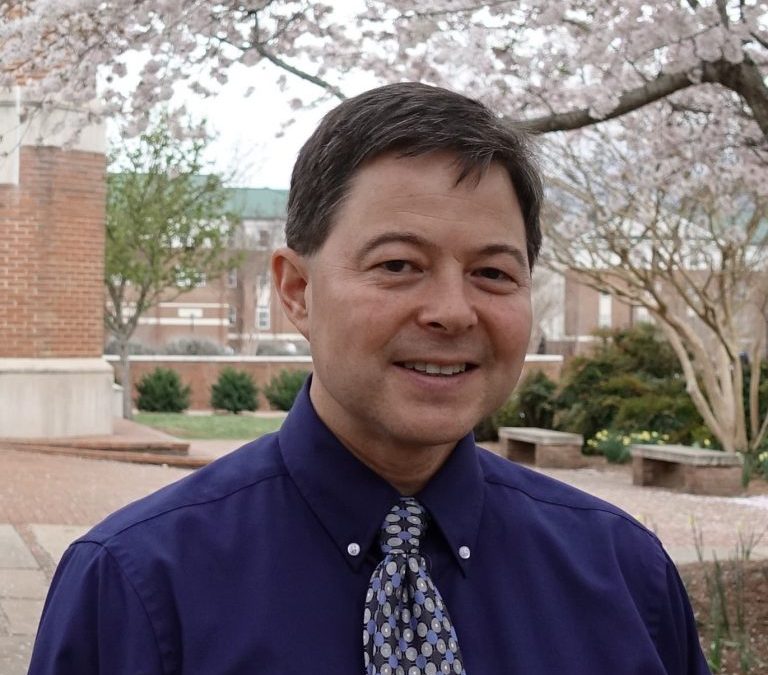
Continuing with our spotlight of our 2020-21 Faculty Affiliates, we want to highlight one of our affiliates, Martin Tanaka, and his exciting work. Martin is an Associate Professor in the School of Engineering and Technology at WCU, who is interested in applying mechanical engineering principles to biomedical problems. He accomplishes this using the principles of product design, design optimization, and computational modeling and simulation.
Martin completed his undergraduate degree in mechanical engineering at NC State, followed by a master’s degree in engineering mechanics at Virginia Tech, and then earned his Ph.D. in biomedical engineering from Virginia Tech and Wake Forest University. Martin is now finishing up his 11th year at WCU, although his focus has not been solely academic. Martin has many years of industry experience with product design and development as well, including working for Texas Instruments and developing products for Mercedes Benz.
He no longer works in the industry, but this background has given him insight into how academics can help technical businesses thrive. With CSFE’s support, Martin is focusing on investigating the elements that businesses, with a special focus on biomedical device companies, need to establish, grow, and sustain healthy, beneficial collaborations with academic partners.
“How do you strengthen it, maintain it, nurture it, and feed it? It’ll grow beyond just what you originally had because now you not only have the professional interaction, you also are developing personal relationships,” Martin said, continuing on, “People get to know people, they work with people, they hear about things that are going on in people’s lives, these are some of the things that should accelerate it, keep it going.”
Sometimes just a little help is all that is needed. A healthy collaboration is symbiotic, and innovation is likely to spark if the environment is right. “If I’m helping a business, say, with engineering, seeds of innovation can form. The partnership is like adding a little fertilizer and water to help ideas grow a little bit better. And if they grow better, then it’s more likely that something useful is going to emerge,” noted Martin.
Currently, Martin is also working with the American Society of Mechanical Engineers (ASME) to develop standards to test the mechanical properties of biological tissues. Material properties could be entered into a database for individuals and groups around the world to use. This will make the process of developing new medical devices more streamlined and give each developer a standard to go by. Access to this information can increase innovation, efficiency, and timeliness within businesses and reduce barriers to entry for small businesses in the biotech sector.
Through this exciting research, Martin hopes to accelerate the approval process for new biomedical devices, which would allow these devices to get into the hands of individuals who need them more quickly and at a lower cost.
We at CSFE are proud of all of Martin’s work so far and are looking forward to seeing what is to come. To look at his past research and work, click here.
Meet Audrey Redford
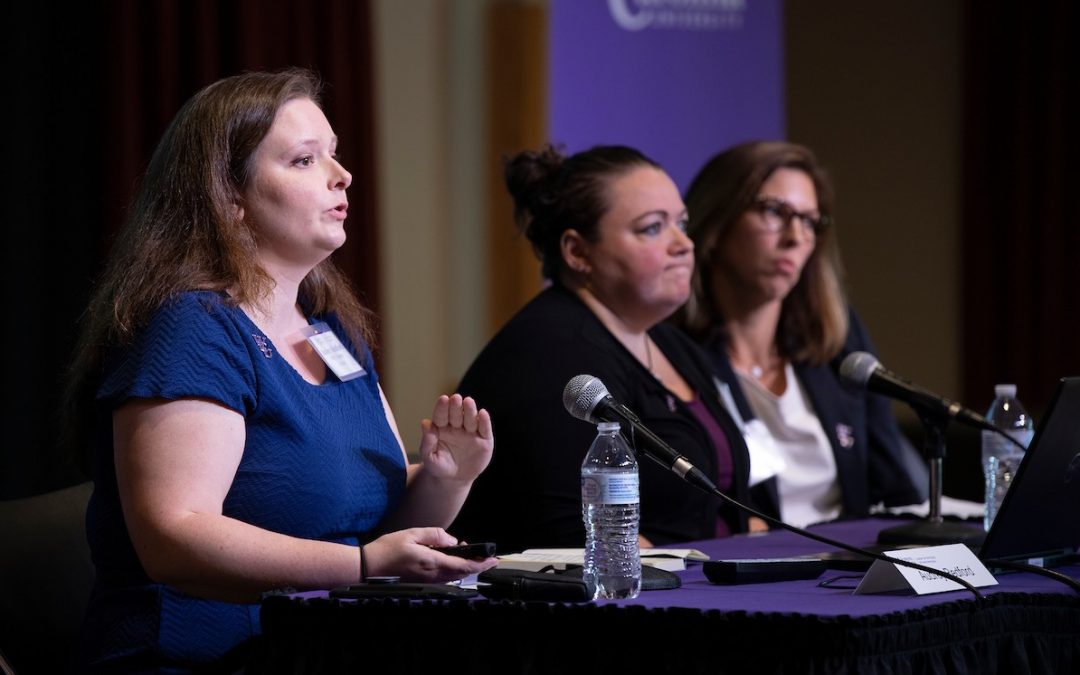
Early in November, CSFE announced our 2020-21 Faculty Affiliates and our plan to spotlight each one of them and their exciting research. Today, we want to highlight one of our affiliates, Audrey Redford. Audrey is an Assistant Professor of Economics in the College of Business at WCU, with research interests in Austrian economics, public choice, and the unintended consequences of drug prohibition as well as interventionism and entrepreneurship in illicit drug markets. Audrey was a presenter on our interdisciplinary panels at our 2019 Opioid & Addiction Town Hall.
Audrey earned her Ph.D. in Agricultural and Applied Economics from Texas Tech University in 2016, then landed a job at WCU upon her graduation. It was from Audrey’s mother, a Substance Use Disorder Counselor, that Audrey first noticed her interest in the research of illicit drug markets and substance misuse. Throughout her education, she found that economics was the perfect lens to dive deeper into her field of interest, thus her path for research was born. “Economics became a useful tool for me to understand this thing that I cared a lot about,” Audrey said.
Audrey’s research for CSFE has two parts, the first is taking a deeper look at the unintended consequences of United States policies regarding drug and alcohol use during the Covid-19 pandemic. Secondly, and her main area of research, is understanding the consequences of North Carolina’s death by distribution law. NC’s death by distribution law is designed to allow prosecutors to potentially charge drug dealers with second-degree murder that sell a substance that unintentionally leads to an overdose death.
“One of the big concerns that I have about that [NC’s death by distribution law] is how is that going to change the nature of people that are selling those drugs?” Audrey asked, noting, “There’s some evidence to suggest that a lot of people when they purchase these substances, purchased them from people they know. Does this new law create an incentive for those known sellers to stop selling to people that they know?”
The second of her concerns being that this law in conjunction with North Carolina’s good Samaritan law could potentially leave individuals now being fearful of having law enforcement involved if they call 9-1-1 for an overdose, even if it would save a life.
Through this research, Audrey hopes to educate people further on drug use and the unintended consequences of policies being made and to show how policymakers and individuals alike could make positive, impactful changes, “We can see that drug probation or increasing drug laws is doing almost the exact opposite of achieving the goal. So even if myself and whoever this the imaginary person is that I’m talking to have different endpoints, I can use their end goals as givens and try to show them using economics, why that’s not being achieved,” Audrey explained.
Audrey is excited to continue in both areas of research during the Spring, and we are proud of all her work so far and the work in the coming months. You can follow Audrey’s work here.
Meet Craig Richardson
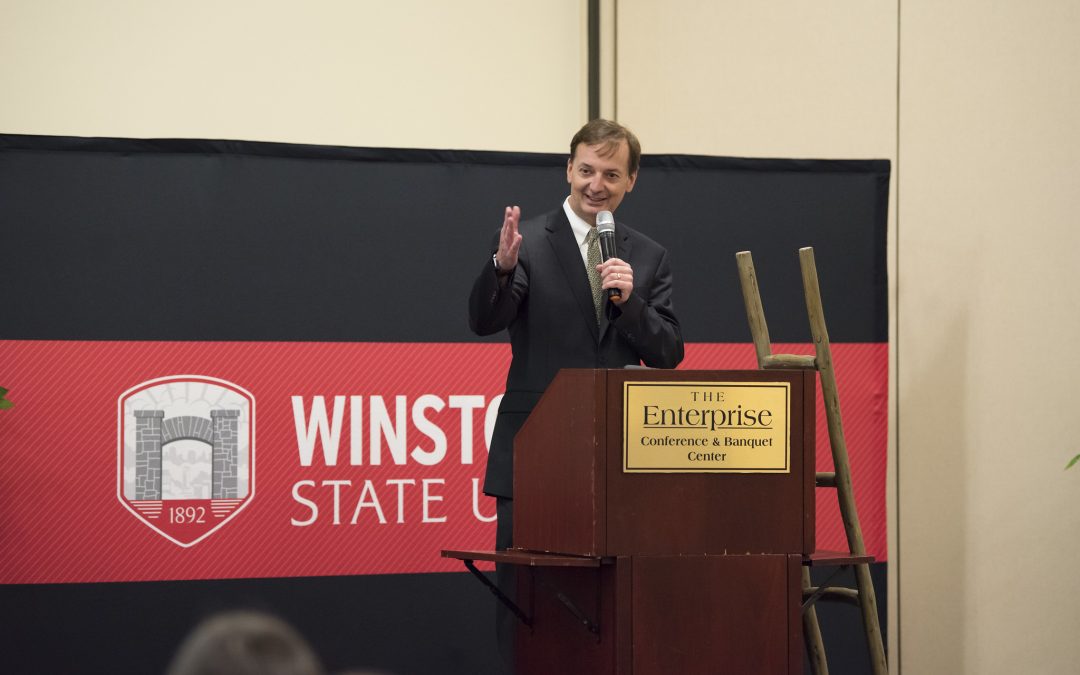
Here at CSFE, we hope everyone had a great Thanksgiving holiday. Earlier last week, CSFE Content Marketing Specialist, Allie Todd, talked with Craig Richardson. As Director of the Center for the Study of Economic Mobility (CSEM) and the BB&T Distinguished Professor of Economics at Winston-Salem State University, Craig oversees the center’s research team of eleven CSEM Faculty Fellows and works with Associate Director Alvin Atkinson on community outreach and student internships.
The mission of CSEM is focused on exploring the causes for the extraordinarily low economic mobility in Forsyth County, North Carolina, where Winston-Salem State University is located. It seeks to implement programs to enable people to gain economic mobility. Craig noted, “We have an interdisciplinary center, but it has economics at its heart. If you’re born poor here, it is hard to get out of poverty, so CSEM was founded on the idea of the metaphor of a ladder of economic mobility. What are those missing rungs, or broken rungs, that keep people from ascending, and what might be some policy changes or some private sector initiatives that could enable people to ascend that ladder?”
Recently, CSEM made a documentary titled, “Bus Stop Jobs,” that tells the story of the typical day of a bus rider in Winston-Salem, which aims to shed light on the juggling act of working and raising a family all while enduring the long bus commutes each day. “This has led to the local Winston-Salem Foundation, which is the largest foundation in the area, giving close to $200,000 in innovation and transportation grants to eight different organizations in the county, which have now explored their own ideas,” said Craig.
CSEM is dedicated to not only researching the gap in economic mobility in Forsyth County but with that research, creating a tangible, positive change. Craig’s vision with CSEM is to be an independent source of information for Forsyth County, providing other area organizations useful data that shows what works best at reducing poverty.
“Our vision is to look at long term solutions to poverty and enable people themselves to lift themselves up. But we must also be aware of what those hurdles are that have been put in place that keeps people from doing that,” said Craig. “So, we start from the perspective that people aren’t passive, people aren’t lazy, they’re hard-working at the bottom of the ladder, just like they’re at the top. The vision is to allow them to have the same opportunities to achieve the American dream as everyone else does. We do that with an interdisciplinary research approach that enables us to have our talented Winston-Salem State faculty giving light to these problems from different points of view.”
The missions for both CSFE and CSEM are similar, and there have been multiple times where our paths have crossed. Our Director, Edward Lopez, has been working with Craig and CSEM on Covid-19 research this fall, along with previously working on policy reports together, “This has been a great collaboration, both formally and informally,” said Craig. We’re researching some of the same basic questions of economic opportunity and mobility but in different contexts. Craig has brought a lot of clarity and attention to problems in urban settings. We’re working to fill that gap in rural, mountainous settings like WNC.
Going forward, CSEM’s latest research fellows are working on upward mobility for the previously incarcerated, as well as improving economic mobility for the disabled. Another project, led by Craig, is a first of its kind project for Forsyth County: it analyzes the economic benefits of Forsyth County’s first-time homebuyers’ program for low-income individuals and families. Although more than 800 families have benefited, prior to CSEM, there had never been an analysis of the return on investment. Early results of the empirical analysis indicate that for $1 the government spends on down payment assistance, these beneficiaries gain almost $9 in accumulated wealth through housing equity, which puts them on a very different path than renting a house. “Notably, because of government regulations through the Dodd-Frank bill, it is nearly impossible to get a mortgage for less than $70,000- banks don’t find it profitable any longer. So, programs such as these can help as a second-best solution,” Craig noted.
The second project is partnering with a software developer to develop a program that helps low-income individuals navigate the maze of social welfare, which typically punishes those who work harder or get raised through substantial rollbacks in aid. “Oftentimes, people can get say, a raise from $10 to $12, but they end up making no more money,” Craig said, noting, “The poor get the lowest reward for working if they end of up on welfare programs, facing “disincentive deserts.” He aims to work with local employers to come up with creative solutions that sidestep these disastrous poverty traps and allow them to give incentives that promote upward economic mobility.
We are proud to work with Craig and CSEM, and excited to see what comes next for them.
Advisory Board meeting set for Wednesday December 09
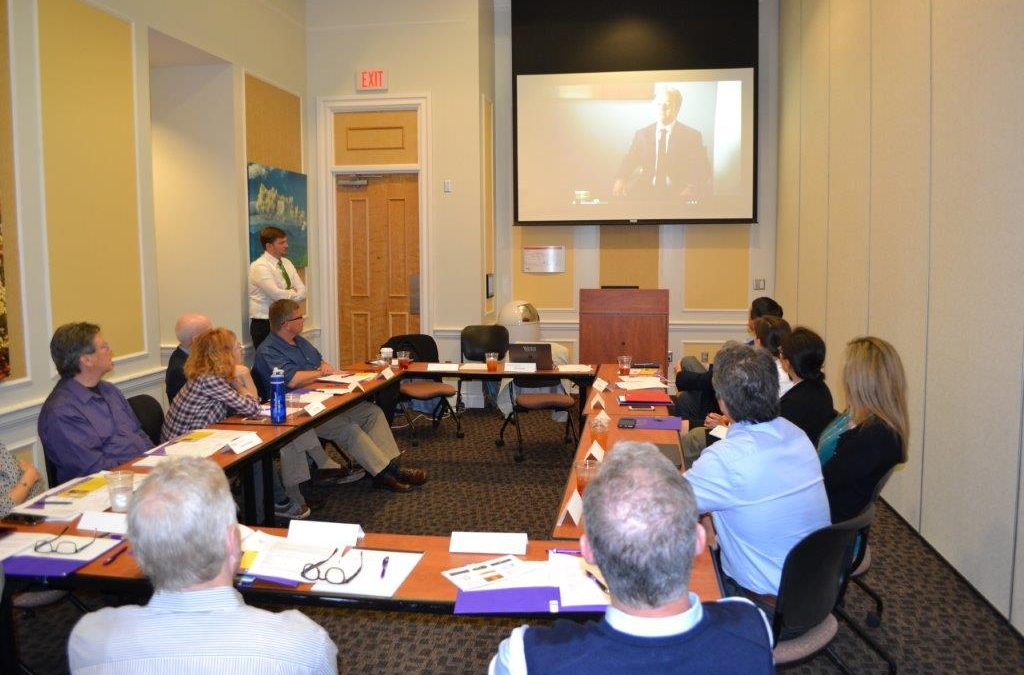
CSFE’s Advisory Board will hold its Fall 2020 meeting virtually on December 9, 2:00-3:30 p.m. As a university center in the UNC System, CSFE is governed by University of North Carolina Policy 400.5[R] and by the Center’s bylaws which were adopted in 2017. The Advisory Board consists of six current WCU faculty members appointed by the Provost, as well as five distinguished members of the community from the private and public sectors, and the Director as a non-voting ex officio member. As designed the board’s purpose includes the following responsibilities:
- Advocate for the Center and the University;
- Advise the Director on the Center’s strategic plan, budget, and activities;
- Deliver advice on potential future Center initiatives;
- Remain active in Center events, meetings, and discussions;
- Provide suggestions as to additional resources that may be able to add value to the Center;
- Provide input and recommendations on how to keep the Center’s programs relevant and innovative.
A roster of current Advisory Board members can be found on our CSFE People Page. CSFE Advisory Board meetings are open to the public; if you would like to attend, please email csfe@wcu.edu for details to join the Zoom call.